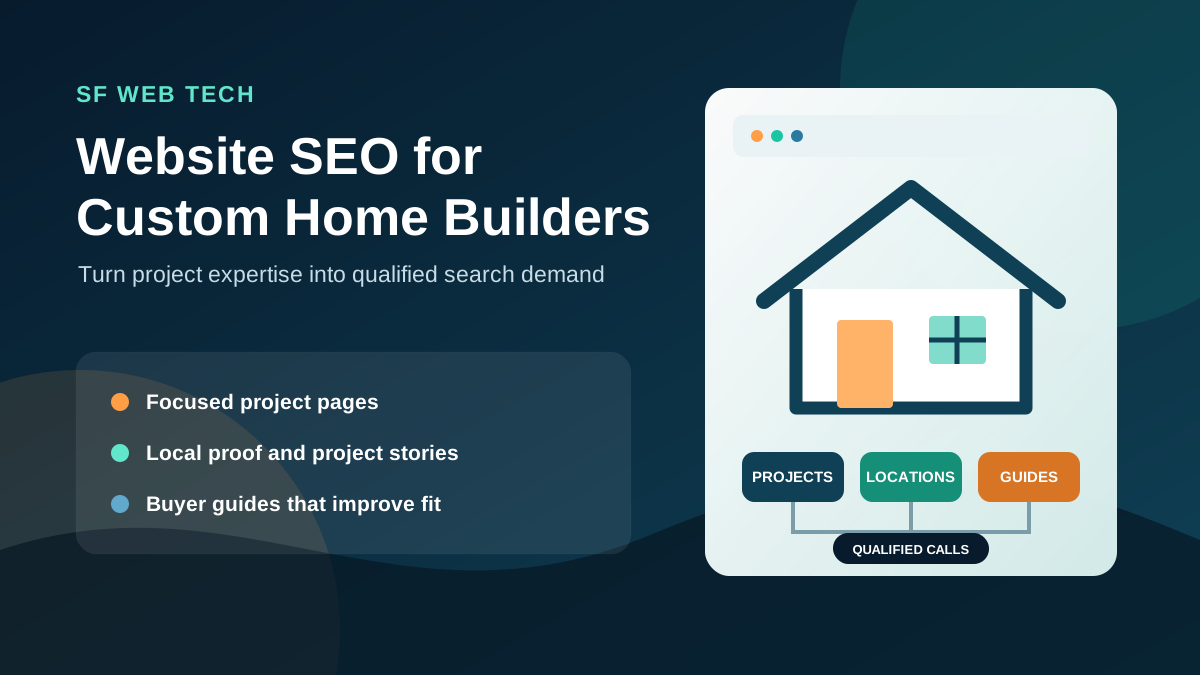
A custom home builder may need qualified prospects who fit its geography, project range, process, and production calendar. A homepage, About page, and gallery may leave service, coverage, qualification, and process questions unanswered. Add useful supported information, then measure qualified visibility and consultation outcomes.
Website SEO for custom home builders means turning your expertise into focused pages that answer real buying questions. Build-on-your-lot homes, estate homes, infill construction, teardown and rebuild work, design-build delivery, and major additions should not be buried in one short Services section when they represent different searches and different sales conversations. The goal is not to publish the most pages. It is to create the clearest route from a suitable search to a qualified consultation.
Start with the projects the business wants more of
Do not begin with a keyword export. Begin with the production plan. List the project profiles that create healthy margins, fit your team, and strengthen the portfolio. Then separate them by the way qualified buyers describe the work. A builder that wants ground-up estate homes should not let renovation content dominate the site simply because smaller remodeling terms show more search volume. Organic visibility is useful only when it creates the right pipeline.
This is where custom builder SEO differs from general contractor SEO. The buyer is not only choosing a trade. They are choosing a delivery model, architectural fit, communication process, and long working relationship. A useful page must therefore do more than mention a service. It should help a prospect recognize whether your process and project type match what they are planning.
- Define the ideal contract types, such as ground-up custom homes, build-on-your-lot projects, urban infill, estate homes, or substantial additions.
- Set honest geographic boundaries based on supervision, subcontractor coverage, permitting knowledge, and travel time.
- Document common fit requirements, including land status, design stage, target timeline, and the financial range your team can responsibly serve.
- Identify the proof available for each priority, including completed projects, client-approved photography, plans, selections, and process documentation.
- Choose pages based on business value and distinct buyer intent, not the number of keyword variations a tool can generate.
Connect technical structure, local visibility, useful content, and lead attribution to the work you want to win.
See the complete contractor SEO approachBuild a service architecture that mirrors buyer intent
Google's SEO Starter Guide recommends organizing a site logically and using descriptive URLs that help people understand the page. For a custom builder, that means a main custom homes page can introduce the company-wide offer, while focused child pages explain genuinely distinct project types or delivery models. The parent provides orientation. The child page handles the detailed search and sales questions.
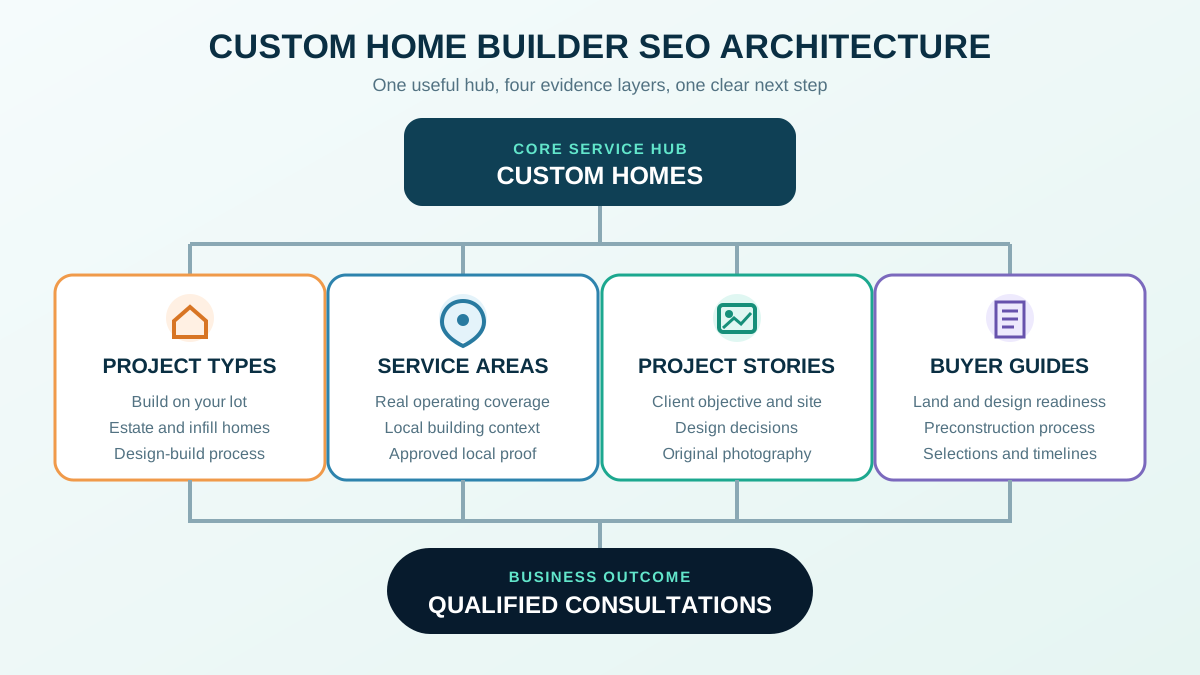
A page deserves its own URL when the buyer's questions, proof, process, or qualification criteria change materially. Build-on-your-lot work may need site access, utilities, surveys, soils, and plan adaptation explained. Urban infill may require demolition, constrained access, neighborhood review, and protection of adjacent properties. Estate homes may put greater weight on architecture, specialty trades, procurement, and a long selections process. Those are different pages because they are different buying problems, not because a keyword tool produced different labels.
Turn every portfolio entry into useful evidence
A builder gallery can be visually strong while leaving project context unclear. When the owner permits publication, add the broad location, home type, site conditions, verified priorities, design choices, and the builder's role. Keep private addresses and unapproved client outcomes out of the story, then measure whether visitors use the project path.
Google's image SEO guidance recommends sharp, clear images placed near relevant text, along with descriptive alt text. That is exactly how a builder should present work. Put the kitchen images beside the discussion of cabinetry, circulation, and lighting. Put the exterior images beside the material and site explanation. Write alt text that helps someone understand the image, not a list of cities and keywords. Original project photography can support both discovery and conversion when the surrounding page supplies context.
- Open with the client's objective and the type of project, using only details approved for publication.
- Describe the site or design constraint that made the project distinctive.
- Explain two or three meaningful decisions, such as orientation, floor plan, material selection, energy strategy, or indoor-outdoor connection.
- Credit the architect, designer, photographer, and other partners when agreements require it.
- Use descriptive image filenames and accurate alt text, then place each image near the relevant explanation.
- Link the story to the matching project-type page and service area page through normal crawlable links.
Build a search structure that makes your services, locations, expertise, and proof easy to find.
Explore website SEO for contractorsCreate local pages from real building experience
The website page and the Google Business Profile should describe the same real operation. Local SEO for home builders explains profile eligibility, service-area boundaries, project evidence, neutral reviews, and the journey from a local inquiry to a contract and deposit.
Custom building is local, but that does not justify copying one city page across a metro. Land availability, lot size, architectural review, permitting, utilities, topography, weather, and buyer expectations can change across the same service area. A location page should exist only when the builder can add firsthand value and support the claim with real operating knowledge.
Use the page to explain where the company builds, which project types fit the area, and what a prospect should investigate early. Cite the relevant local authority when discussing current permit or zoning rules, and keep that information reviewed. Do not imply that the company has an office in every market. Google's LocalBusiness structured data documentation allows business details to be marked up, but markup is not a substitute for an accurate physical location, visible service information, or local proof.
- Honest coverage and consultation boundaries
- Approved projects from the area
- Local site and design considerations
- Current authority links for regulated details
- Distinct questions buyers in that market ask
- The same copy used across every market
- No projects or staff experience from the area
- Generic claims about local expertise
- Unverified permit and zoning statements
- A false impression of a staffed office
Answer the questions that qualify the consultation
Useful content helps suitable prospects prepare while giving poor-fit inquiries a respectful way to self-select out. Explain how the process begins, when an architect joins, what information is needed about the lot, how preconstruction works, how selections are managed, and which factors affect schedule. Avoid publishing an artificial universal price or timeline when the work varies. Explain the variables and the next decision instead.
Create guides around decisions that occur before a prospect is ready to hire. Useful subjects include choosing land before plans, custom design versus adapting an existing plan, what belongs in preconstruction, how allowances work, preparing for a design meeting, evaluating a builder's portfolio, and comparing delivery methods. Each guide should link to the service page that continues the journey. Google's crawlable link guidance says standard anchor elements with an href help Google discover linked pages, so important paths should not depend only on scripts or visual cards that are not real links.
Work backward from gross profit, close rate, and capacity before deciding what a builder lead is worth.
Set the economics behind qualified leadsMeasure the pages that create suitable opportunities
Rankings and organic sessions are diagnostic signals, not the business outcome. Track which landing page started the visit, which pages the prospect viewed, and which call or form became a suitable opportunity. Then retain the requested project type, service area, land status, design stage, broad investment fit, timeline, and sales result in the CRM. This lets the builder distinguish a high-traffic inspiration article from a lower-traffic service page that consistently starts serious conversations.
- Organic entrances and search visibility by project page, location page, guide, and project story
- Calls and forms tied to the original landing page
- Qualified consultations by project type and geography
- Disqualification reasons such as location, project scope, land status, timing, or financial fit
- Progression from inquiry to consultation, preconstruction, proposal, and signed agreement
- Content gaps revealed by repeated questions from qualified prospects
Review the architecture as the business changes. If the team stops pursuing a project type, do not delete the page automatically. Decide whether it still serves buyers, earns visibility, or needs a new role, then make any URL decision deliberately. If a new market becomes operationally important, earn the location page with local projects and substantive research before asking it to rank.
The strongest custom builder website behaves like a well-run preconstruction process. It gives the visitor a clear sequence, surfaces the right questions early, documents the builder's judgment, and makes the next commitment understandable. Build focused project pages, connect them to credible location and project evidence, publish guides that improve buyer readiness, and measure the consultations that fit the production plan. That is how a portfolio becomes a search and qualification system.
Book a discovery call to plan the project pages, service areas, proof, and measurement needed to attract better-fit custom home inquiries.
Map your custom builder SEO systemSources and further reading
- Google Search: SEO Starter Guide
Crawlable links, descriptive page information and content organization. Practical trade examples are SF Web Tech recommendations.
Source checked .
- Google Search: creating helpful content
People-first writing, useful original information and the absence of a preferred word count. Does not substantiate a client result.
Source checked .
- Google Search documentation updates: FAQ retirement
Google states FAQ rich results stopped appearing May 7, 2026; useful visible FAQs remain appropriate for readers.
Source checked .
- Google Search: review snippet guidelines
Restrictions on self-serving LocalBusiness and Organization review snippets.
Source checked .