An artificial-turf prospect may browse attractive project photos and still leave without contacting the installer. Use analytics, inquiry records and user testing to learn whether cost context, product suitability, pet-use information, drainage, maintenance or the contact path is creating friction.
Project appearance is only one part of the decision. Turf prospects may need installed-price variables, product documentation, pet-use information, drainage details, maintenance expectations and a clear estimate process. Answer the supported questions accurately and measure which paths lead to qualified inquiries.
Turn the gallery into useful project evidence
A gallery can show workmanship, materials and finished appearance, but it may not explain scope, site conditions, product choice, price variables or the next step. Add accurate context to permissioned projects and test whether visitors can move from relevant proof to the right inquiry path.
A project gallery may leave cost, product use, surface temperature, drainage, odor, and maintenance questions unanswered. Use search queries, sales notes, calls, form responses, and user testing to identify which gaps matter in the current market. Some visitors may defer or continue comparing, so diagnose the full path before deciding that traffic, the gallery, or the form is the main constraint.
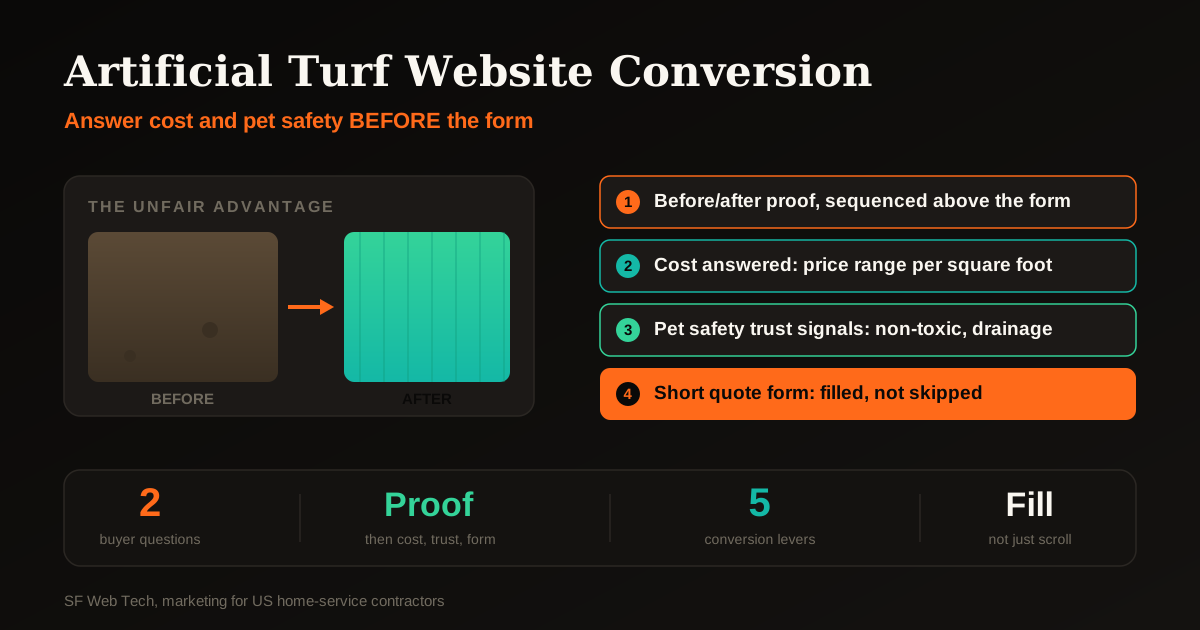
Answer cost and use questions before the form
Clear cost assumptions and product-use information can reduce uncertainty for some prospects. Test their placement near the form, retain a way to ask project-specific questions, and measure delivered inquiries, qualification, estimates, completed installations, and paid outcomes before attributing a conversion change to either answer.
Project photos can document appearance and installation details, while cost and use questions usually need clear written scope, assumptions, and supporting records. Combine the formats where they help a prospect evaluate fit, then use observed behavior and qualified outcomes to decide what the page should emphasize.
The five conversion levers
Treat these five areas as a test plan: project proof, price context, material and safety documentation, form design, and mobile contact access. Measure qualified submissions, confirmed appointments, and won work because the same changes can perform differently by market and traffic source.
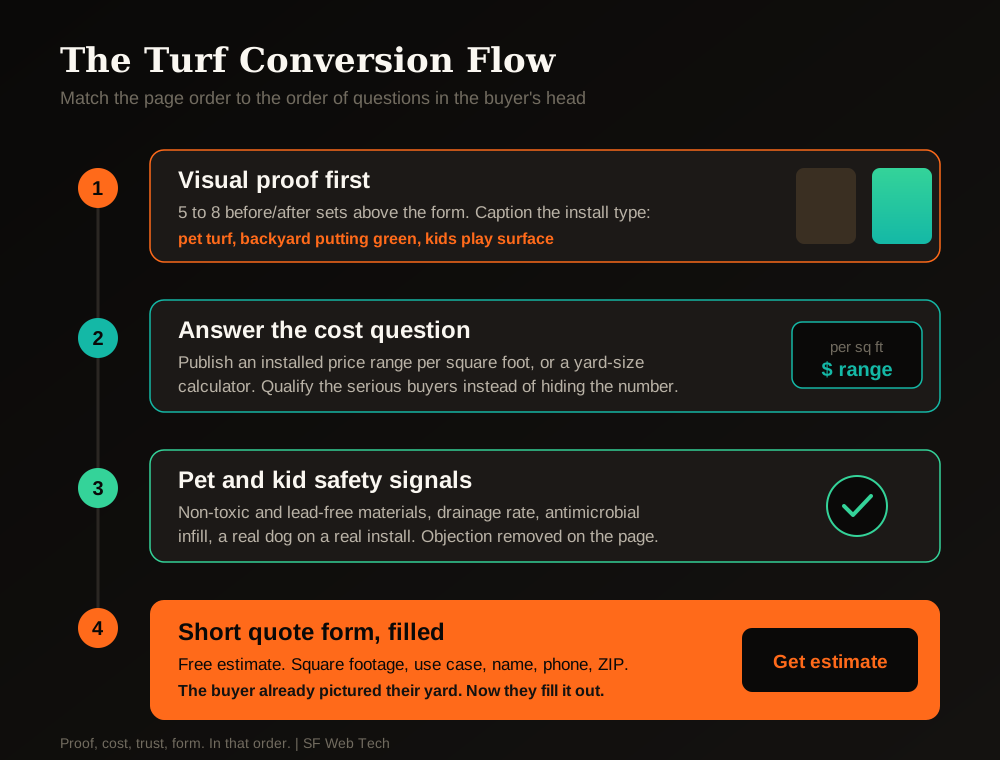
Lever two deserves a closer look, because most installers get it exactly wrong. They hide price because "every yard is different." True, but the buyer is not asking for a bid, they are asking whether you are in their universe. An installed range like "most projects land between X and Y per square foot" or a calculator that takes square footage and use case and returns a ballpark keeps the serious buyers and gently disqualifies the tire-kickers before they waste your time on a site visit.
Price-range calculators, before/after sequencing, and quote forms built to convert
See how we design converting turf sitesPet-focused turf prospects may have distinct questions about drainage, odor control, materials, maintenance and suitability. Answer with manufacturer-supported information and permissioned project evidence. Do not publish certification, safety or performance claims unless the exact product and documentation support them.
“The turf buyer has already pictured their own yard before they reach your form. Your job is to answer cost and safety fast enough that picturing it turns into filling it out.”
Rebuild the quote form
The form is where all the work either pays off or dies. Most turf sites run a generic five-field contact form that feels like a commitment. Reframe it as a free estimate, cut the fields to the essentials, and put it directly under your before/after proof. Compare the two approaches:
- Header: "Get your free turf estimate"
- Yard size in square feet (or a slider)
- Use case: pet turf, play area, putting green, landscape
- Name, phone, ZIP, that is it
- Sits directly below the before/after gallery
- Reassurance line: no obligation, no pressure
- Header: "Contact Us"
- No square footage field
- No use case, so no way to answer cost
- Name, email, phone, address, long message box
- Buried in the footer under everything
- Feels like signing up for a sales call
- Use a call-to-action label that accurately describes the next step, such as requesting an estimate or consultation.
- Ask for dimensions or use case where the answer changes preparation, qualification, or guidance.
- Keep required fields limited to information the team needs and can protect.
- Explain how contact information will be used and confirm consent where required.
- Test form placement beside the evidence and information a prospect needs at that point.
- Verify delivery, response, qualification, completed projects, and opt-out handling.
The same proof-then-price sequence, applied to another high-visual trade
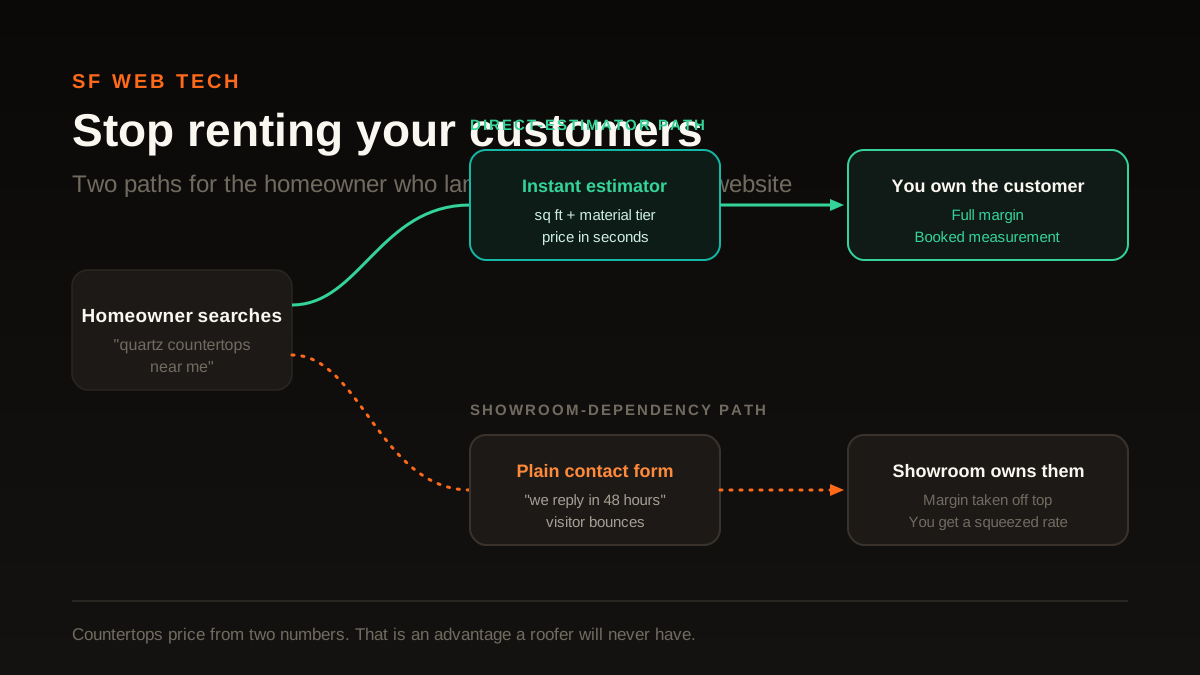
Read the countertop conversion breakdownWhat good looks like
A converting turf site is not more clever than a losing one, it is more honest and better sequenced. Proof, then cost, then trust, then a short form. That order matches the exact order of questions in the buyer's head, so the page feels like it is reading their mind instead of stonewalling them.
When qualified inquiries are weak, review traffic intent, service fit, project evidence, unanswered questions, page usability, form delivery, response handling, and sales follow-up together. Photos, forms, and traffic can each help or constrain the journey. Use observed behavior and reconciled outcomes to identify the next test.
We will review the page, measurement setup, and inquiry path, then prioritize corrections you can test.
Request a turf website conversion reviewLocal SEO, Google Ads, and websites measured from qualified turf inquiries through booked and paid work.
Marketing built for home-service contractorsSources and further reading
- Google Search: SEO Starter Guide
Crawlable links, descriptive page information and content organization. Practical trade examples are SF Web Tech recommendations.
Source checked .
- Google Search: creating helpful content
People-first writing, useful original information and the absence of a preferred word count. Does not substantiate a client result.
Source checked .