A countertop prospect may research after business hours, compare project images, review price variables, and decide whether to call, visit a showroom, or request an estimate. A site cannot reveal an abandoned journey by itself. Measure device use, estimator activity, form delivery, calls, qualified consultations, showroom visits, completed projects, and paid outcomes.
A countertop visitor may compare direct fabricators, showrooms, materials, measurements, and installation options before making contact. Review where the site sends that visitor and whether the direct estimate path is clear. Measure qualified inquiries and sold work before attributing a commercial loss to the website.
Why fabricators keep renting their own customers
If the business depends heavily on referral partners, review that dependency using its actual records. A direct inquiry path can provide another channel, but the right balance depends on contribution, capacity and partner relationships; there is no universal showroom-referral percentage.
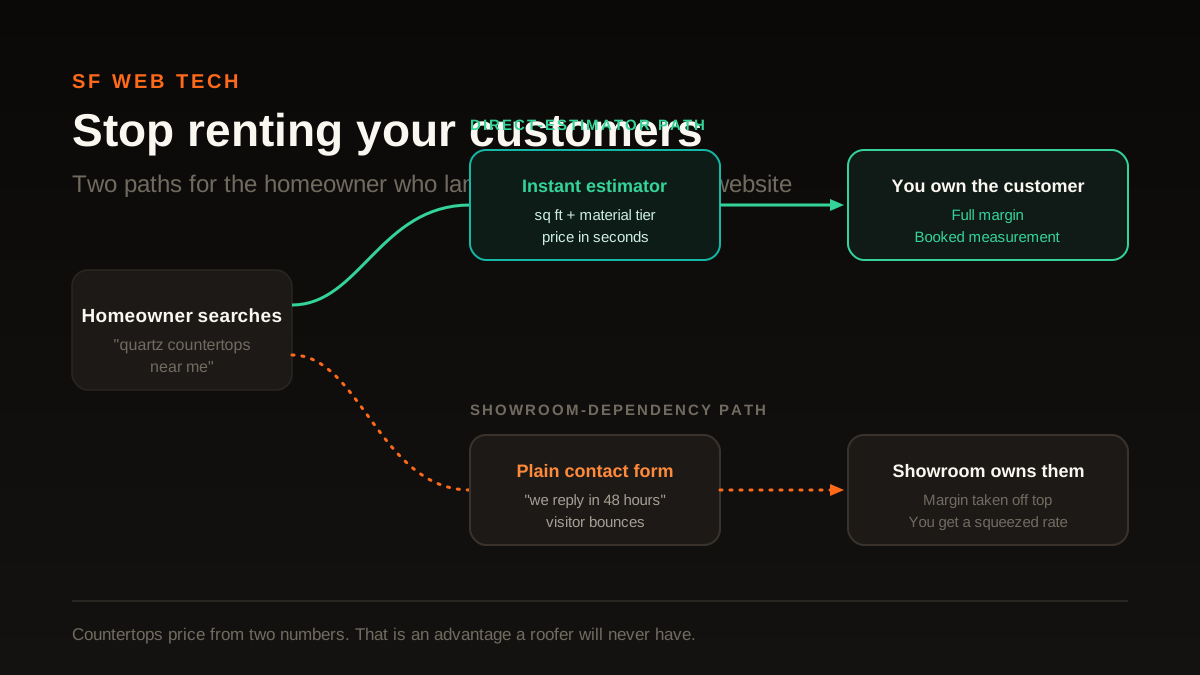
Direct traffic is the escape hatch. People search for countertops by material, by color, and by 'near me' every single day. They land on fabricator websites ready to move. Then they hit a contact form that treats a hot buyer like a cold lead, asking them to wait and hope for a callback. So they leave and go find a showroom that will talk to them today. Your site is generating demand and then throwing it over the fence.
A preliminary countertop estimate needs clear assumptions. Area and material are only part of the scope: edges, cutouts, removal, access and installation can matter. Mark a calculator result as illustrative and confirm the final quote after assessment.
Websites that quote and book, not just sit there and look pretty.
See how we design conversion-first home service sitesThe one thing you can do that a roofer cannot
Here is the unfair advantage almost no fabricator is using. Countertops are one of the very few home improvement products where the price is genuinely calculable from two numbers: square footage and material tier. A roofer cannot give an honest instant price online, too many pitch, deck, and access variables. A remodeler cannot, every kitchen is a custom scope. You can. Sink cutouts, edge profiles, and backsplashes are add-ons you layer on top, but the core estimate is real math a homeowner can trust.
Material-tier pricing transparency pre-qualifies the lead
A fabricator may choose to publish material tiers or a planning range when current pricing, assumptions, scope, and exclusions can be maintained. Test comprehension, qualified inquiries, estimates, and sold work. Do not assume a price range attracts, repels, or pre-sells a particular customer.
This is content no generic conversion guide can write for you, because it is specific to countertops. A window company cannot publish an honest instant price. You can, and that transparency is a moat. It signals that you are the straight shooter in a market full of vague 'call for pricing' competitors, and it does the qualifying work for you around the clock.
“The showroom's only real advantage was that a person there would give a homeowner a number the same day. An instant estimator on your own site takes that advantage away and hands it to you, at 9 p.m., with no salaried salesperson in the room.”
The direct-estimator path versus the showroom-dependency path
- Homeowner searches, lands on your site, gets a price in seconds
- You own the customer relationship from the first click
- You set retail pricing and keep the full margin
- Leads arrive pre-qualified by the tier they selected
- Traffic you paid for converts instead of bouncing
- Homeowner bounces from your form and drives to a showroom
- The showroom owns the relationship and the follow-up
- The showroom sets retail and takes the margin off the top
- You get a drawing and a squeezed subcontractor rate
- The demand your marketing created enriches someone else
A 20-minute call to map the tiers and the flow for your market.
Talk through an estimator build for your shopThe conversion mechanics that make the estimator pay off
The estimator can help customers explore a price range when its inputs, assumptions and next step are clear. Review these four operating details before deciding where it belongs on the page.
How to build this without gutting your website
You do not need to rebuild everything to add an estimator. The sequence is straightforward, and each step stands on its own.
- Set documented material tiers and honest per-square-foot bands, framed as ranges that require measurement and scope review.
- Build a mobile-friendly estimator that explains each input and returns a clearly labeled planning range.
- Test its placement against customer comprehension and qualified inquiries instead of requiring it above every gallery.
- Offer an optional way to save or send the result; collect only the contact data needed for the requested follow-up.
- Set a supportable response expectation and compare estimator use with accepted inquiries, estimates, won work and paid work.
An estimator can complement showroom and partner referrals by supporting direct-search research. Keep those channels distinct in attribution, explain estimate assumptions, and compare accepted consultations, measured quotes, completed projects, and paid outcomes before deciding that the estimator captured otherwise lost demand.
Measure discovery, estimator use, qualified inquiries, estimates, and sold work together.
Connect the estimator to relevant service informationThe same conversion logic works across the trades, but the instant-price advantage is almost unique to countertops. If you also run adjacent services, the playbook shifts, and it is worth seeing how a different trade solves the same bounce problem.
How another high-ticket trade can connect planning information with a measured estimate-request path.
Related read: window replacement website conversionClear pricing context can reduce uncertainty when the ranges are current and the assumptions are visible. Test the estimator against accepted inquiries and won work, then revise the inputs when actual project data shows a mismatch.
We build the tool, the pages, and the traffic that feeds them.
Book a call and let us scope your estimatorSources and further reading
- Google Search: SEO Starter Guide
Crawlable links, descriptive page information and content organization. Practical trade examples are SF Web Tech recommendations.
Source checked .
- Google Search: creating helpful content
People-first writing, useful original information and the absence of a preferred word count. Does not substantiate a client result.
Source checked .