
A search for epoxy garage flooring can refer to a DIY product or professional installation. Make the offered service clear in the ad and landing page, then inspect actual search terms and qualified inquiries. Do not assume every broad search is unsuitable.
DIY and installation searches can overlap in flooring and other trades. Use negative keywords carefully and test the wording against real inquiries. The objective is a service match, not excluding every visitor who has researched a product.
How DIY and professional-installation intent can overlap
Epoxy flooring searches can cover product research, surface preparation, do-it-yourself instructions, professional installation, or comparisons between those options. The wording alone does not prove whether a searcher will hire a contractor. Use the account’s search terms and lead dispositions to identify which patterns are relevant to the service actually offered.
Review kit, tutorial and supply-only searches if the company sells installation alone. Decide exclusions from context so useful research-stage prospects are not removed automatically. This is an account test, not a claim that every generic flooring keyword wastes spend.
A broad search such as “epoxy floor” may trigger for product, tutorial, retail, or installer language. Review the search terms available in the account and connect them to accepted and rejected inquiries. Exclude a term only when its meaning is outside the offer or repeated account evidence shows that it produces the wrong service intent.
Use the contractor’s current scope and estimate records for any advertised price. Surface preparation, area, condition and the actual coating system affect the quote. Retail kit prices and unattributed national installation ranges are not a reliable basis for an ad promise.
Retail kit pricing and a contractor’s installed project price describe different scopes. Do not turn an unattributed price comparison into an ad claim or assume every product researcher is commercially irrelevant. Test professional-installation wording, search-term exclusions, and landing-page qualification against the contractor’s recorded inquiries.
Negative-keyword review: a controlled filter
Negative keywords can prevent an ad from matching excluded language, but match behavior and context matter. They do not carry a media charge of their own, yet an overly broad exclusion can remove a relevant query. Treat the list as a documented account control that is reviewed alongside search terms and qualified outcomes.
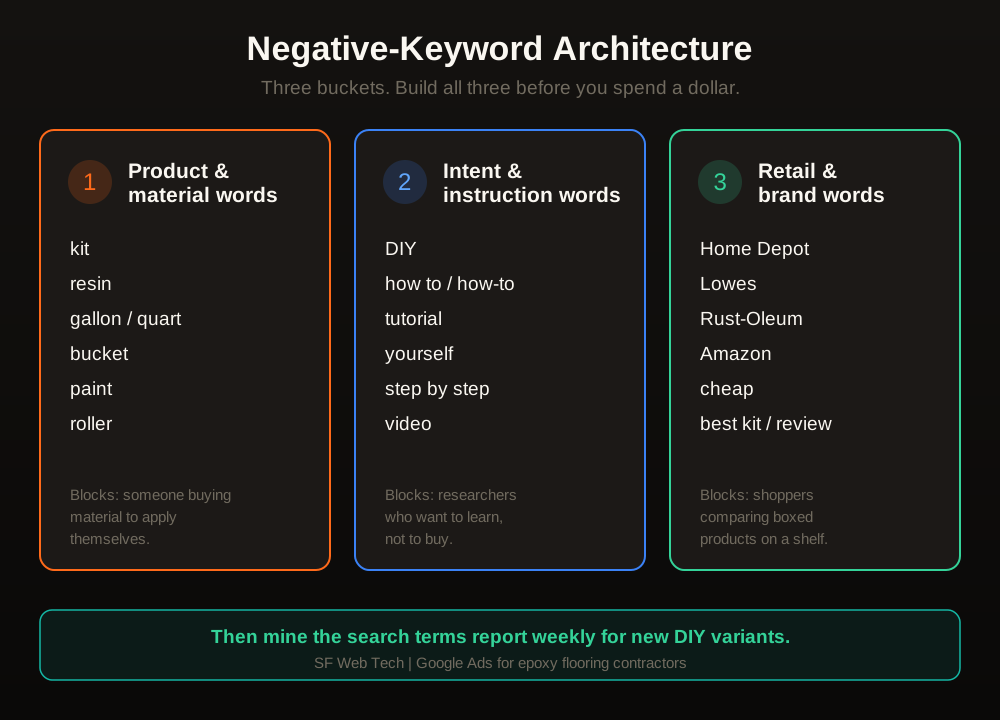
Start with three hypothesis groups when they fit the offer: product and material terms, instruction terms, and retail or brand terms. Review each candidate against the actual query and service. An installation-only contractor may exclude some of them, while another business may keep research-stage searches that later produce suitable inquiries.
- epoxy garage floor installer near me
- polyaspartic garage floor company
- professional concrete coating contractor
- garage floor coating quote
- commercial epoxy flooring installation
- epoxy kit for garage floor
- how to epoxy a garage floor yourself
- Rust-Oleum garage floor reviews
- cheap epoxy resin gallon
- DIY metallic epoxy tutorial
The two groups give the account reviewer a starting hypothesis. The installation examples state a professional-service need more directly. The product and instruction examples may be outside an installation-only offer, but they still require review before exclusion. Compare query wording, accepted leads, rejected reasons, bookings, and paid outcomes where the data is available.
Review search terms, exclusions, landing pages, and lead quality against the work you actually sell.
See our Google Ads planning for contractorsTest price or qualification language in the ad
Price disclosure is a test, not a rule. A genuine starting price or range may set expectations for some contractors, while another account may qualify better through service, project-size, material, or consultation language. The wording must match the business’s current scope and approved price.
A genuine starting price or range can help set expectations when its scope and exclusions are clear. Test whether it improves qualified inquiries. Do not publish a generic per-square-foot figure as the business’s price or assume it prevents every unsuitable click.
The ad should say professional installation when that is the offer. Compare inquiry quality and contribution before deciding whether a price disclosure is useful. A visitor researching DIY options is not automatically unqualified.
“Use the ad to state the professional service clearly, then judge any price or qualification language by the inquiries and outcomes it produces.”
Pair any approved price with substantiated service details, such as the coating systems offered, the consultation process, or a real scheduling condition. Use licensing, warranty, turnaround, or “free” language only when current business evidence supports the exact claim. The landing page should repeat the same qualifications and explain the next step.
Check Local Services Ads eligibility before planning the channel
Local Services Ads use a lead-based billing model for eligible categories and markets. Placement, verification, service eligibility, lead handling, and credit rules depend on the current program and account. Confirm that professional floor coating is eligible in the contractor’s market before treating this channel as an option.
Check current LSA eligibility for the actual service and market before including it. Verification, badges, billing and credit rules are platform-specific and can change. Compare qualified inquiries under the business’s criteria rather than assuming every platform lead is suitable.
- Confirm that the exact flooring service and market are eligible in the current program.
- Record the verification, license, registration, review, badge, billing, and budget requirements shown for the account.
- Define how calls, messages, bookings, disputes, and lead credits will be reviewed.
- Keep platform leads separate from accepted and qualified sales opportunities.
If the business is eligible, compare Local Services Ads and search campaigns as separate cohorts. They can run together, separately, or not at all depending on budget, verification, coverage, and lead quality. Preserve the source and qualification result for each inquiry so a platform lead is not assumed to be a suitable job.
Bring the current campaign, search terms, service area, and lead dispositions for a scoped review.
Book a strategy callThe landing page has to finish the qualification
A landing page should confirm that the advertised offer is professional installation, state the actual service area and project qualifications, show evidence the contractor can substantiate, and explain the inquiry step. It cannot turn every relevant click into an estimate, but it can help the visitor decide whether the service fits.
- State professional installation and the coating systems actually offered.
- Show authorized project photos and describe the documented scope.
- Explain which property, surface, access, or project details affect an estimate.
- Use a concise quote form and a visible phone path when the office can answer it.
- Publish warranty, licensing, price, and turnaround claims only when current evidence supports them.
Keep the search term, ad, and landing page aligned. Then measure accepted inquiries, rejection reasons, appointments, proposals, won work, and payment separately. That evidence shows whether the qualification path is helping; the page structure alone does not prove a booked estimate.
Put it together
Start with the contractor’s offer, service area, account history, and qualification rules. Review product, instruction, and retail language as hypotheses rather than automatic exclusions. Test substantiated ad wording and use a landing page that clearly explains professional installation. Continue, revise, or stop from recorded search terms and qualified outcomes, not from a promise that one tactic will produce booked jobs.
Keep approved prices and their qualifications consistent across ads and pages. Update repeated claims when scope or pricing changes, and make clear when an assessment is needed for a final quote.
Review service fit, search terms, qualification, landing-page claims, and measurement before changing spend.
Plan an epoxy campaign reviewThe broader playbook your epoxy campaign sits inside.
Read: Google Ads for home services in 2026Rank the organic way while your ads pre-qualify the buyers.
Read: flooring contractor website SEOSources and further reading
- Google Search: SEO Starter Guide
Crawlable links, descriptive page information and content organization. Practical trade examples are SF Web Tech recommendations.
Source checked .
- Google Ads: keyword matching options
How keyword match types relate to search intent; account strategy and examples are editorial recommendations.
Source checked .
- Google Ads: negative keywords
Negative keyword behavior and exclusions. The suggested service exclusions require account-specific review.
Source checked .
- Google Ads: advanced location options
Presence and interest settings and the limits of geographic targeting accuracy.
Source checked .
- Google Ads: average daily budgets
Platform budget and spending mechanics, not a trade-specific CPC or lead-cost forecast.
Source checked .
- Google Maps: prohibited and restricted content
Rules against fake engagement, incentives and selectively soliciting positive reviews.
Source checked .
- Google Local Services Ads: getting started
Eligibility, lead handling and verification. Platform lead-billing criteria differ from a contractor’s sales qualification.
Source checked .
- Google Local Services Ads: Google Verified badge
Current badging and discontinuation of the former Google Money Back Guarantee.
Source checked .
- Google Ads: search terms report
The report contains a privacy-limited set of actual searches that triggered ads and can inform keyword and landing-page decisions. Epoxy intent groupings are SF Web Tech review hypotheses.
Source checked .
- Google Ads: negative keyword ideas from search terms
Search terms can be reviewed for negative-keyword ideas; match type must be chosen carefully so relevant searches are not blocked.
Source checked .