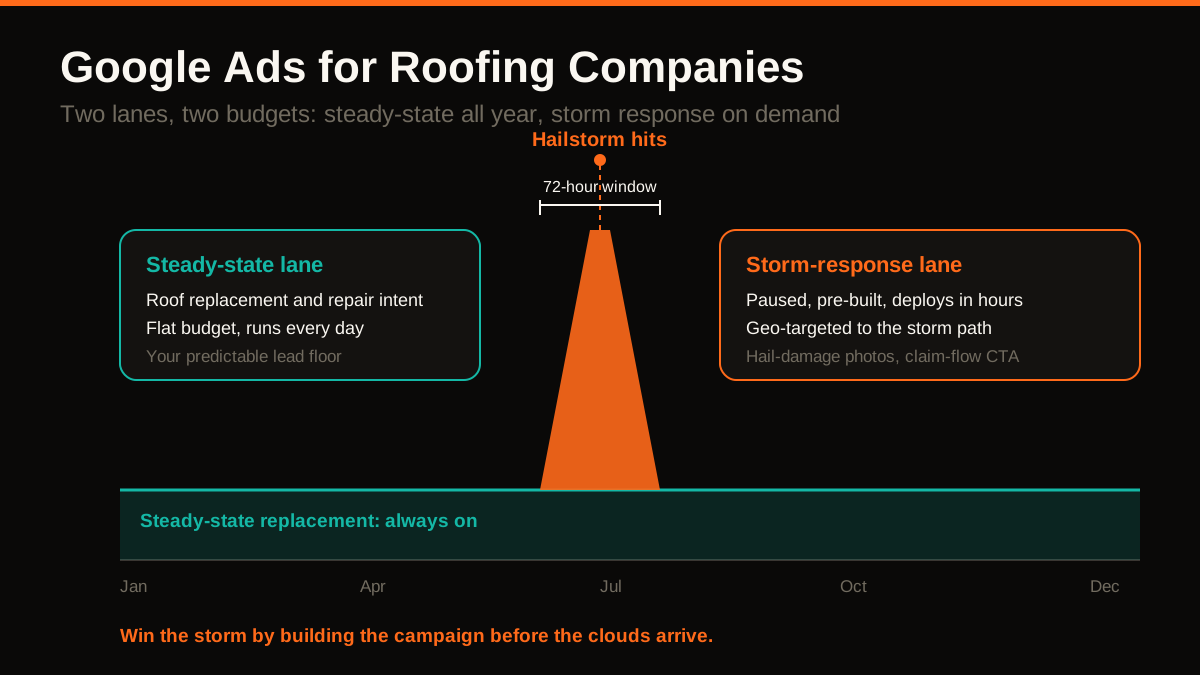
Roofing search demand can change after severe weather, but timing, auction conditions, services, and crew capacity vary by market. Plan the campaign before demand changes, activate it only where the business can serve the work, and judge it by qualified inquiries and later sales outcomes.
Roofing campaigns should distinguish repairs, replacement planning and any storm-related work actually offered. The contract value, coverage decision and customer research process vary by job. Build the account around real scope and capacity instead of assuming most work is insurance-funded.
How to calculate roofing lead cost for your market
There is no universal roofing cost per lead. Cost changes with market competition, service mix, targeting, search terms, bidding, landing pages, qualification rules, and follow-up. Use the business’s own accepted inquiries and completed work to set a useful range.
There is no universal roofing cost per lead. Use the market, service mix, actual qualified inquiries and contribution from completed jobs to assess a campaign. Compare channels using the same lead definition rather than an unattributed benchmark.
Calculate media cost per acquired customer from unique qualified opportunities and the company’s observed close rate. Add management, software, call handling, and sales costs, then compare the total with job contribution after fulfillment. Revenue alone does not establish profitability.
Separate planned work from weather-response demand
A single campaign can blur planned replacement, repair, emergency, and weather-related demand. Separate them when the business offers those services and the account data shows that different budgets, messages, schedules, or qualification rules improve control.
- Runs on an agreed schedule and budget based on normal capacity
- Targets only repair, replacement, inspection, or financing intents the company actually serves
- Supports customers who may compare scope, evidence, warranties, and estimates
- Uses a landing page that explains service fit, process, and the next step
- Is reviewed by qualified opportunities, proposals, sold work, and collected revenue
- Activates only for confirmed serviceable locations and available capacity
- Uses accurate repair or inspection language without diagnosing damage from the ad
- May need faster triage and different scheduling than planned work
- Explains the real inspection and insurance-assistance process, when offered
- Stops or narrows when capacity, lead quality, or location evidence no longer supports it
Storm-related demand and planned replacement can require different budgets, schedules, messages, capacity controls and landing pages. Separate them when the account data and operating model show that the distinction improves management and qualification.
Prepare weather-response campaigns before demand changes
Preparation reduces rushed account changes. Keep the draft campaign, landing page, service-area rules, conversion checks, and approval path ready, then activate them only when current conditions and crew capacity support the offer.
- Keep weather-response demand separate when it needs a different budget, schedule, or qualification rule.
- Use ad language that matches verified services and current availability. Do not advertise free, emergency, or round-the-clock service unless it is real.
- Prepare a landing page that explains the inspection path, served locations, authorized project evidence, and insurance assistance only when the contractor provides it.
- Target confirmed affected and serviceable locations. Do not infer property damage or expand beyond the crew’s operating area.
- Document who can approve activation, budget changes, pauses, and lead-routing updates.
Set budgets from service mix and capacity
Set an ongoing baseline from the contractor’s normal services, lead quality, job contribution, and crew capacity. Keep any weather-response reserve subject to current account evidence and an approved spending change. A region’s weather history alone does not determine the right split.
Plan an agreed baseline and decide in advance how spending changes are approved. Weather-related expansion needs both account evidence and crew capacity. If eligible, compare LSA and Search on qualified opportunities; neither channel provides a predictable lead floor.
Check current LSA eligibility and verification for the roofing business and location. Evaluate charges, lead quality and booked inspections against Search results. Do not assume LSA is always the cheapest channel or that a particular badge or credit process is available.
Write the measurement plan before launch
Define the stages the business will record before media starts: unique inquiry, accepted roofing opportunity, scheduled inspection, completed inspection, proposal, sold job, and collected payment. Note which system owns each stage, who updates it, and how duplicate calls or forms are handled. This creates one comparison method for Search, LSA, organic discovery, referrals, and repeat customers.
Connect campaign touches to one accepted opportunity, then update inspections, proposals, sold work, and collected revenue without double counting.
Use the roofing journey-and-touch ledgerReview search terms, excluded locations, working call and form routes, contact capacity, and disqualification reasons on an agreed schedule. Change one material control at a time when the volume supports it, then document the date and reason. A platform conversion can guide optimization, but budget decisions should also use accepted opportunities and commercial outcomes from the company’s records.
Compare Google Ads and Local Services Ads for roofers using eligibility, search control, lead handling, and booked-inspection evidence to decide how the channels should work together.
“Campaign readiness matters when the business can serve the work, the offer is accurate, and qualified outcomes can be measured.”
Match landing pages to the roofing decision
A well-controlled campaign can still produce weak outcomes when the destination is slow, vague, or mismatched to the search. The page should help the visitor confirm service fit and choose a working call or form path. Measure accepted inquiries and booked work after the click.
- Give the page one clear service and next step that matches the ad.
- Use authorized project evidence and current credentials that support the advertised work.
- Explain financing or insurance assistance only when it is offered and accurately scoped.
- Provide a working mobile call route and a form that collects the information needed for qualification.
- Check loading, accessibility, submission, routing, and follow-up before sending paid traffic.
Storm-response and steady-state, built and managed for home-service contractors.
See how we build roofing Google Ads campaignsCommon ways roofers waste their ad budget
Review accurate profiles, project evidence, service information, and qualified-inquiry measurement alongside paid search.
Read: Local SEO for roofersCheck service clarity, mobile calls, forms, routing, qualification, and later outcomes after the click.
Review roofing website contact pathsStart with one controlled campaign
Start with one service and operating area the roofer can support. Build the matching campaign and landing page, verify call and form routing, and define a qualified opportunity. Add LSA only when the business and location are eligible, then compare channels using the same acceptance and outcome rules. Prepare weather-response work separately if the contractor actually offers it.
For the broader decision across the website, local visibility, paid demand, intake, and commercial stages, use the roofing marketing agency framework.
Review service mix, capacity, targeting, landing pages, qualification, and outcome tracking before committing budget.
Plan a roofing demand reviewGoogle Ads, local SEO, and websites built for home-service pros.
See our contractor marketing servicesSources and further reading
- Google Search: SEO Starter Guide
Crawlable links, descriptive page information and content organization. Practical trade examples are SF Web Tech recommendations.
Source checked .
- Google Ads: keyword matching options
How keyword match types relate to search intent; account strategy and examples are editorial recommendations.
Source checked .
- Google Ads: negative keywords
Negative keyword behavior and exclusions. The suggested service exclusions require account-specific review.
Source checked .
- Google Ads: advanced location options
Presence and interest settings and the limits of geographic targeting accuracy.
Source checked .
- Google Ads: average daily budgets
Platform budget and spending mechanics, not a trade-specific CPC or lead-cost forecast.
Source checked .
- Google Maps: prohibited and restricted content
Rules against fake engagement, incentives and selectively soliciting positive reviews.
Source checked .
- Google Local Services Ads: getting started
Eligibility, lead handling and verification. Platform lead-billing criteria differ from a contractor’s sales qualification.
Source checked .
- Google Local Services Ads: Google Verified badge
Current badging and discontinuation of the former Google Money Back Guarantee.
Source checked .