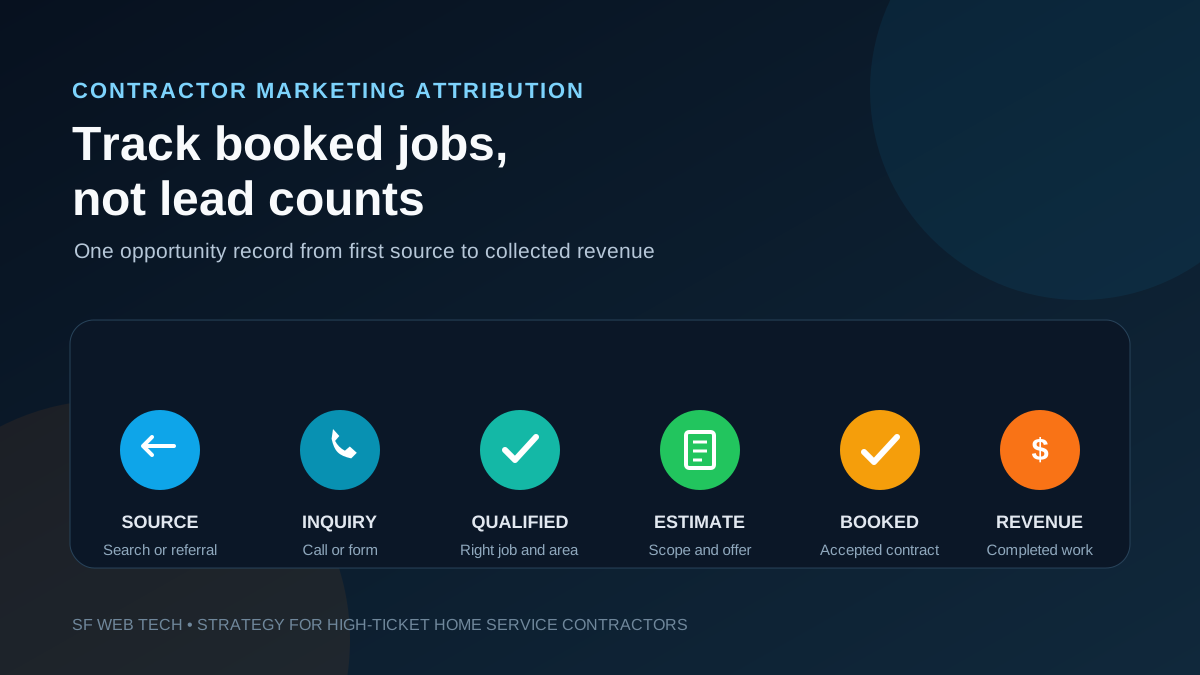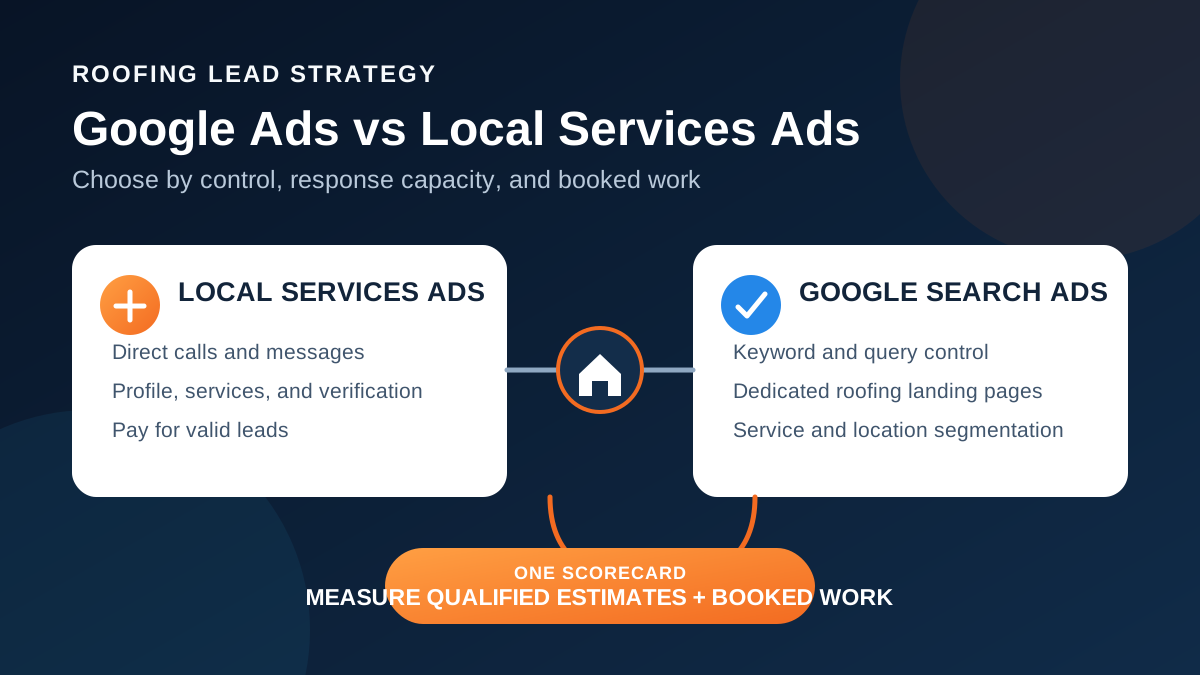
When comparing agencies, ask for concrete scope, ownership terms, reporting definitions and relevant evidence. Price, a referral or a polished presentation alone does not establish what will be delivered. Use the questions below to make proposals comparable.
You do not need to become an SEO expert to compare agencies. You need a consistent set of questions, written answers and enough evidence to check what is being offered. This guide covers seven useful questions, common warning signs and a simple comparison framework.
Look for clear work scope, accountable reporting and evidence relevant to your business. A written qualified-lead commitment is different from a guaranteed Google ranking. Read the target, conditions and remedy before deciding whether an offer fits.
Review the scope, evidence standards, local page approach and attribution process before comparing proposals.
See the full contractor SEO system firstThe 30-minute vetting framework
Use the same questions with every agency and ask for the answers in writing. Clear answers make scope, evidence and pricing easier to compare. Vague answers are a reason to request more detail before deciding.
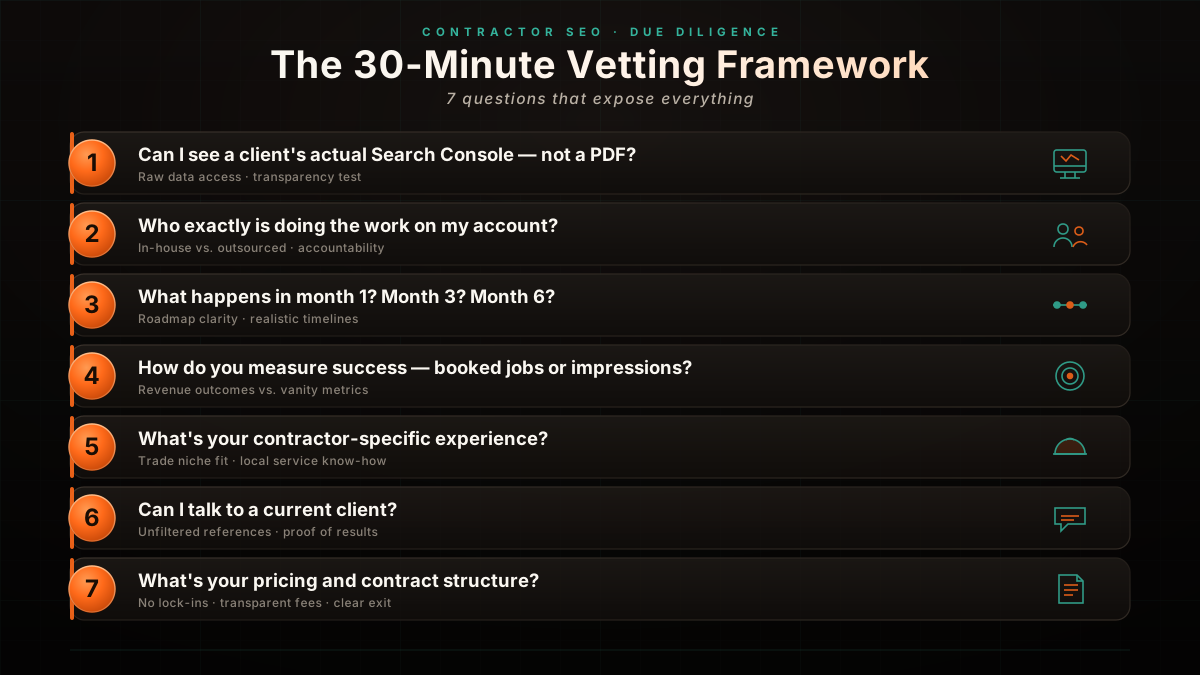
1. "Can I see a client's actual Search Console, not a PDF?"
Ask for recent, permissioned evidence that connects search activity with inquiries and business outcomes. An agency may use an anonymized account view, a client-approved screen share or a dated case study because client data is private. Confirm the reporting period, definitions and source before relying on the example.
2. "Who exactly is doing the work?"
Ask who will work on the account, what each person owns, how continuity is maintained, and how market knowledge enters decisions. Request named responsibility, a communication cadence, change records, and access to the work so accountability does not depend on a sales presentation.
3. "What happens in month 1? Month 3? Month 6?"
Ask for a sequenced plan with named deliverables and review points. Early work may include measurement, technical fixes, profile corrections and priority service pages. Crawl timing, competition, distance and demand affect when search visibility changes, so the plan should define what will be delivered without inventing a universal ranking schedule.
Ask what work and measurements will be available in each reporting period. Organic timelines vary, so avoid treating either a three-month success promise or a twelve-month statement as proof of competence or dishonesty. Accountability should begin with the agreed delivery and measurement process.
4. "How do you measure success?"
Search impressions, clicks and rankings help diagnose the work, but they do not establish revenue. Ask the agency to report qualified calls and forms separately, preserve source data and reconcile later outcomes such as estimates and sold work with your team. Agree on definitions before the campaign begins.
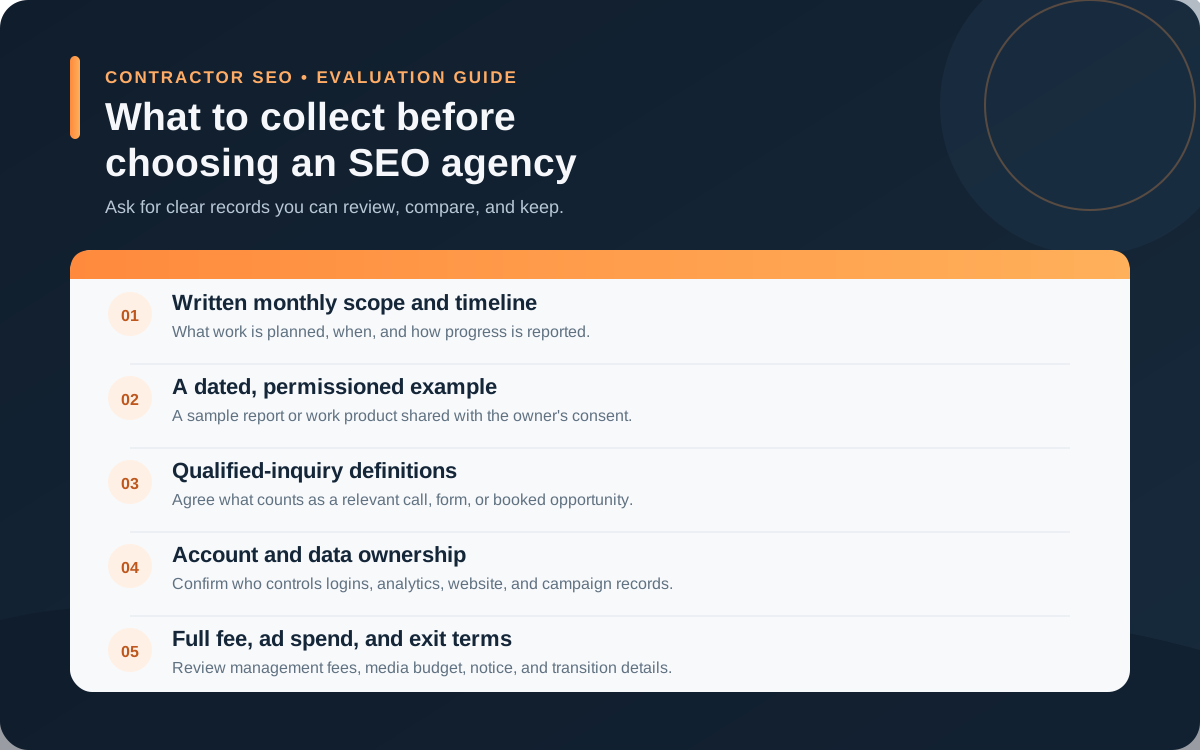
Open the evidence guide at full size if you are reading on a small screen.
5. "What's your contractor-specific experience?"
Home-service SEO often involves local intent, the map results, service areas, seasonality and customer evidence. Ask whether the agency has worked with your trade or a comparable service business and what it learned. Relevant experience can reduce ramp-up time, but the evidence should still be dated, permissioned and specific to the work performed.
6. "Can I talk to a current client?"
Ask whether a current or recent client has agreed to act as a reference. Some clients will not permit this, so an agency may offer a different form of approved evidence. If a reference is available, ask about communication, scope changes, reporting and what the client can verify firsthand.
7. "What's your pricing and contract structure?"
Ask for the standard fee, included scope, separate advertising budget and any discount in writing. Our published standard fees are consistent across the website and proposals. Discovery establishes the right scope and lead target; any client-specific discount is documented clearly. Lead Launch is $1,500/month for paid acquisition. Lead & Local Growth is $2,000/month for paid acquisition, a custom website and ongoing local marketing. Local Authority is $3,500/month for expanded content and local coverage. Advertising is separate, starting at $50/day. All packages are month-to-month.
Our package fees, what drives SEO scope, and how to compare them with shared leads.
Read our 2026 contractor SEO package pricing7 red flags that should make you walk away
Use the questions above to compare agencies and the signals below to guide follow-up. Treat each signal as a reason to request evidence, clarify the scope, and review the contract rather than applying an arbitrary pass-or-fail count.
Red flag 1: "Guaranteed first-position rankings"
No agency controls Google rankings. A ranking promise differs from a written qualified-lead target with a defined remedy. SF Web Tech agrees a minimum before enrollment and waives subsequent management fees if that cumulative minimum is not met in 90 days; advertising remains separate. Ask what counts, when the clock starts and what happens if the target is missed.
Red flag 2: $299/month "SEO packages"
A low-priced offer may have a narrow scope. Ask exactly what it includes, who reviews the work and how success is measured. Price alone does not prove spam, poor quality or zero value.
Red flag 3: Long-term contracts with no exit clause
Long commitments can be reasonable when setup costs, staffing or discounts are explicit, but the exit terms should be clear. Compare notice periods, asset ownership, early termination terms and what happens to accounts and data after the relationship ends.
Red flag 4: They can't show you what they're doing
The agency should be able to identify completed work, changed pages, outreach activity and reporting sources. Ask how you will review deliverables and who owns the website, profiles, analytics and content.
Red flag 5: AI-generated content with no human review
Ask how the agency researches, reviews and updates content, including content produced with AI tools. Useful pages need accurate services, original local or project details where available, editorial review and a clear purpose for the customer. Publishing at scale does not replace those checks.
Red flag 6: They do not connect the work to your business goals
A capable agency should ask about the services, areas, capacity, margins, and outcomes the business wants to measure. Review the written scope, ownership, reporting definitions, examples, and commercial terms rather than treating traffic or keyword discussion alone as proof of fit.
Red flag 7: No local or home-service specialization
An agency without directly comparable work may still be capable, but it should explain how it will learn the trade, validate assumptions and limit your risk. Ask for related local-service experience and a clear first-cycle research plan.
Ask what ongoing technical or citation maintenance covers and how it is reported. Structured data and business details may need updates as a site changes. Recurring fees should correspond to real work and an agreed scope, rather than being judged fraudulent merely because the initial setup was one-time.
What a genuinely good agency looks like
Four useful dimensions for comparing a contractor SEO agency are listed below. Add any requirements that matter to the business, market, risk, and operating model.
- Transparency, you can see the work, the data, and the reasoning behind it. Live dashboards, not just polished PDFs.
- Relevant experience, they understand local service demand and can support claims with dated, approved evidence.
- Evidence, inquiries and business outcomes are defined separately and the source can be checked.
- Pricing clarity, fees, media budget, ownership and exit terms are written down before work begins.
How SF Web Tech stacks up against the framework
At SF Web Tech, you work directly with Sohail. Start with a free strategy call and initial audit you can keep. We can arrange a reference conversation with an existing client who agrees. Lead Launch is $1,500/month for paid acquisition. Lead & Local Growth is $2,000/month for paid acquisition, a custom website and ongoing local marketing. Local Authority is $3,500/month for expanded content and local coverage. Advertising is separate, starting at $50/day. All packages are month-to-month.
Review our portfolio for relevant types of work, and ask for supporting context before relying on a historical performance claim. Client contact details are shared only with permission. A reference conversation and a clearly defined proposal are more useful than transferring another business’s results to your forecast.
Review published fees, included work, separate media costs and the qualified-lead terms.
Compare our packages side by sideThe bottom line
Use a written comparison rather than choosing from a pitch alone. Ask the seven questions, verify the evidence you can, compare ownership and exit terms and make sure the reporting connects search activity with qualified inquiries.
If you want to compare SF Web Tech with this framework, book a free 30-minute discovery call. We will review your goals, available baseline data and likely first priorities, then answer the seven questions directly.
30 minutes to review goals, baseline data, scope and fit.
Book a free discovery callSources and further reading
- Google Search: SEO Starter Guide
Crawlable links, descriptive page information and content organization. Practical trade examples are SF Web Tech recommendations.
Source checked .
- Google Search: creating helpful content
People-first writing, useful original information and the absence of a preferred word count. Does not substantiate a client result.
Source checked .
- Google Maps: prohibited and restricted content
Rules against fake engagement, incentives and selectively soliciting positive reviews.
Source checked .
- Google Search documentation updates: FAQ retirement
Google states FAQ rich results stopped appearing May 7, 2026; useful visible FAQs remain appropriate for readers.
Source checked .
- Google Search: review snippet guidelines
Restrictions on self-serving LocalBusiness and Organization review snippets.
Source checked .