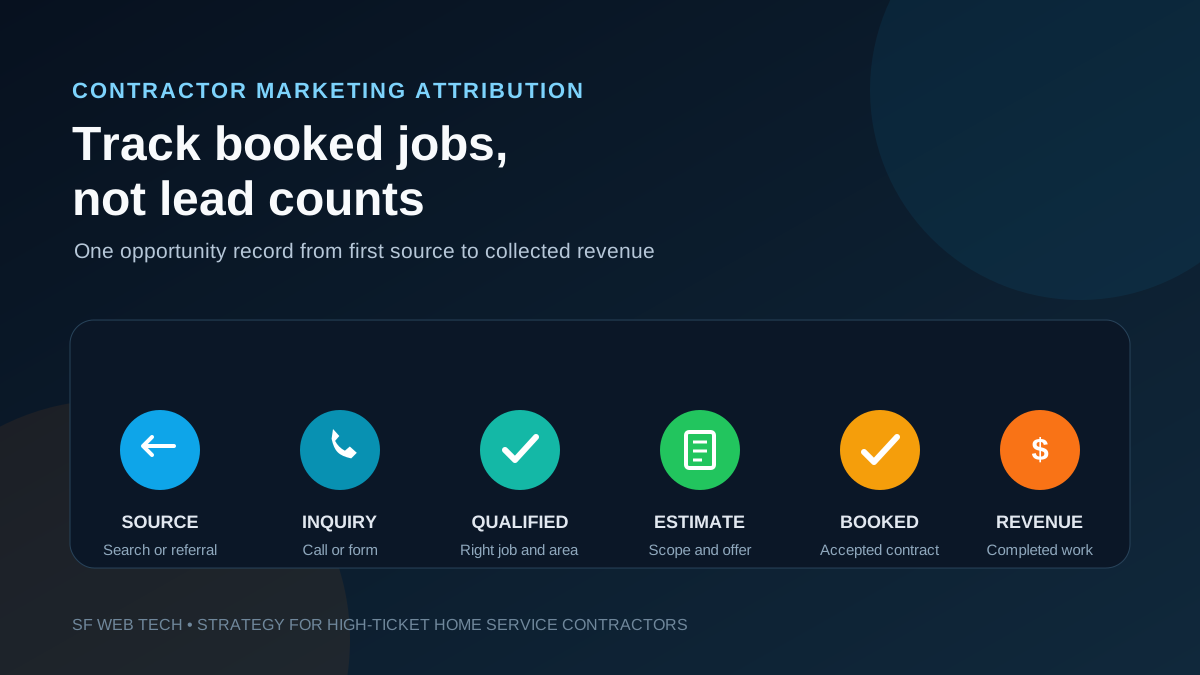
Contractors often receive reports full of impressions without a clear connection to inquiries or booked work. The useful question is whether an SEO program addresses real demand, produces owned assets, and can be evaluated with accepted inquiries, qualified leads, appointments and customers kept separate. Start with the business records, not a universal return claim.
SEO can be a viable long-term acquisition channel for an established contractor when local demand, competition, margins, capacity, and measurement support the investment. It is not instant and it is not suitable for every business. This framework covers what the work produces, how to compare it with shared-lead platforms and paid search, what evidence to watch, and when another channel may deserve priority.
What contractors actually get from SEO
SEO can improve how a contractor explains services and can support discovery in local and standard search results. A website, useful content and documented project evidence are owned assets; a ranking position is not. Search visibility, clicks, inquiries and booked work can all change, so each needs its own measurement.
An inquiry through your own website is not a lead you bought from a shared-lead seller. The homeowner can still contact other contractors, so organic search does not make the customer exclusive to your business. Clear service information, credible evidence, and timely follow-up remain important.
For an example of a delivered website asset, see the FS Landscaping project. The project page is evidence of the work shown, not a promise of leads or rankings for another business.
Organic marketing can contribute inquiries, but the volume and timing depend on demand, competition, the website, and the offer. Evaluate relevant search data alongside a qualified-lead register. Do not assume that steady work necessarily produces a fixed upward curve or enough jobs to fill a calendar.
Our local SEO service explains the profile, page, and measurement work that can support discovery.
SEO can support discovery through useful pages and an accurate local presence. You own delivered website assets, but not search rankings. Track attributable inquiries where possible and keep unknown sources separate. Future leads are not guaranteed, and a prospect may also contact competitors.
SEO vs. shared lead platforms (Angi, Thumbtack, HomeAdvisor)
Compare any lead provider using its current written pricing, exclusivity terms, credit rules and actual close rates. Those terms vary. Do not assume every platform charges the same range or sells every lead to the same number of contractors.
Compare the full annual cost and outcomes of every channel using the same rules. Shared leads stop when payments stop, while delivered website assets can remain useful but still need maintenance and do not guarantee future inquiries. Calculate cost per qualified lead, appointment, won customer and paid customer from reconciled records rather than assuming one channel always becomes cheaper.
Shared-lead platforms may help fill a short-term gap when their current terms and your close rate support the cost. A contractor should compare those leads with inquiries through an owned website using the same qualification and paid-customer definitions. Platform pricing and access can change, while a website also needs ongoing work; neither route is automatically cheaper or more reliable.
30-min strategy session, no obligation
Book your free discovery callSEO and Google Ads: how to evaluate a blended plan
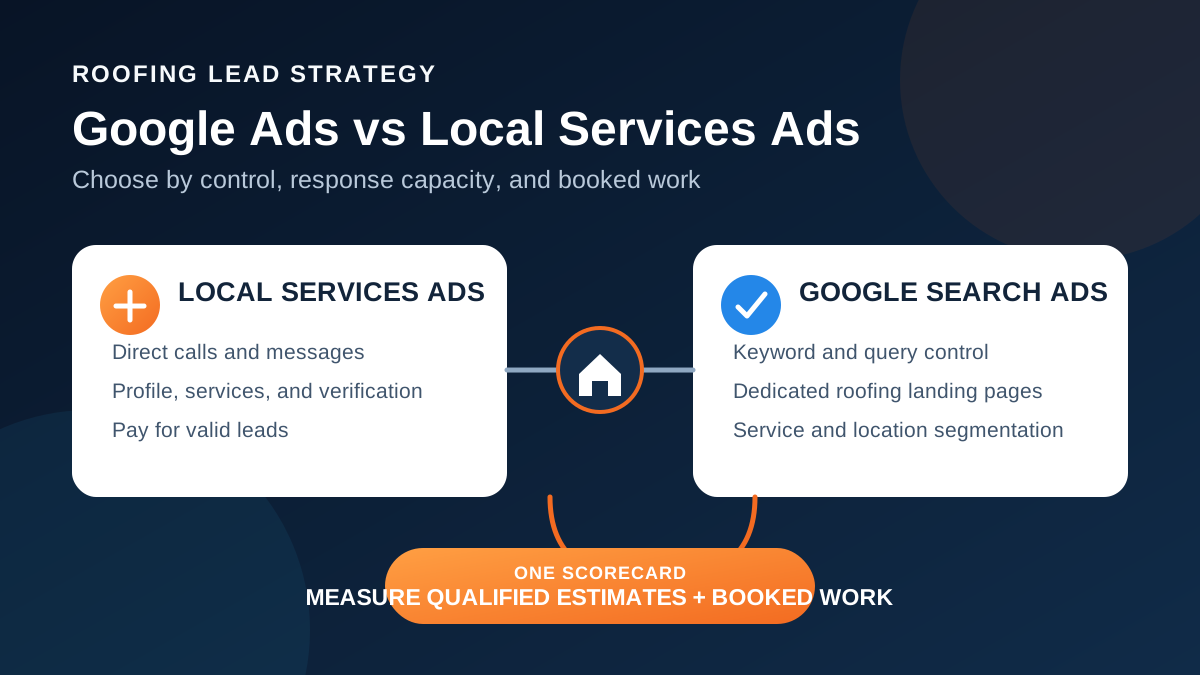
Google Ads and SEO can serve different roles, and some businesses may test them together while others should prioritize one channel. Paid search can provide faster auction feedback while spend continues; organic visibility may take longer and can change after publication. Set the mix from demand, unit economics, capacity, and reconciled outcomes rather than a faucet-and-well promise.
For contractors with an urgent pipeline need and workable unit economics, paid search can be tested while SEO develops. Other businesses may be better served by fixing attribution, the offer, or conversion first. Set each channel's budget from local demand, margin, sales capacity, and accepted-to-paid outcomes; do not assume a fixed handoff date or that organic traffic will automatically replace paid traffic. Our contractor marketing packages include agreed paid-acquisition management, with advertising spend separate.
For a closer channel comparison, read contractor SEO vs. Google Ads.
The real timeline, what actually happens, month by month
SEO timing varies by market, site history, competition, execution, and what is being measured. Define early crawl, indexation, visibility, inquiry, qualified-lead, and revenue checkpoints without promising a fixed month when the channel pays off.
Begin with technical and contact checks, accurate business information and a useful content plan. Monitor discovery and qualified inquiries as the work proceeds. Organic results may take time and can vary substantially; there is no universal monthly sequence from map movement to cheaper booked jobs.

SEO is unlikely to solve an immediate scheduling gap. Paid channels may produce faster feedback, but they do not guarantee booked jobs either. With a longer runway, compare the full cost and actual paid-customer outcomes at agreed checkpoints; visibility and cost per job can improve, stall, or decline. The contractor SEO cost guide explains what belongs in that comparison.
When SEO is NOT worth it (the honest part)
Plenty of agencies will tell you SEO is right for everyone. It isn't, and pretending otherwise is how people get burned. Here are the situations where we'll tell you to wait or spend your money elsewhere.
- You have limited runway. If the business cannot sustain a medium-term investment, test a channel with faster measurable feedback while preserving cash for operations.
- You cannot take more work. If capacity is already full, fix scheduling, staffing, or service limits before buying more demand.
- You need near-term opportunities. Evaluate paid search, Local Services Ads eligibility, referrals, or shared leads using current economics; none guarantees jobs this week.
- You are in a thin market. Estimate realistic query volume and qualified demand before committing to either SEO or paid media.
- You will not support the operating basics. Marketing cannot compensate for inaccurate information, missed inquiries, weak qualification, or absent follow-up.
A competitive trade or small market is a reason to investigate demand and economics, not an automatic yes or no. Estimate the relevant searches, reachable service area, available evidence, and likely cost before deciding whether SEO belongs in the plan. Timing, capacity, and runway can still rule it out for now.
What it actually costs
A value comparison needs clear pricing and scope. SF Web Tech publishes its current package prices and core terms on the pricing page; the agreed qualified-lead minimum can vary with services, market, and advertising budget.
- Lead Launch, $1,500/mo: Paid acquisition for established businesses with capacity for more inquiries.
- Lead & Local Growth, $2,000/mo (Recommended): Paid leads alongside a custom website and ongoing local marketing assets you own.
- Local Authority, $3,500/mo: Expanded useful content and local coverage for businesses ready for a larger ongoing program.
All packages are month-to-month with the agreed written terms and no separate agency setup fee within scope. Advertising is separate. Evaluate the total acquisition expense against actual job contribution and close rates; a single large contract does not automatically pay for the program.
Break-even depends on contribution from completed work, the close rate and the full acquisition expense. No generic contractor job automatically pays for the package. Advertising spend is separate from management.
A practical SEO fit worksheet
Use one 30-day or 90-day window and the same definitions when comparing SEO with paid search, referrals, and lead platforms. If the sales cycle runs longer, keep later bookings and payments separate from the original inquiry period. This worksheet is a decision aid, not a forecast.
- Choose the services and service area you can actually fulfill, then check whether relevant demand exists there.
- Set a contribution estimate for a typical completed job after direct delivery costs, and decide how much of it can support acquisition.
- Count every channel's expense, including management, media, content, website work, and lead fees where applicable.
- Record each raw inquiry, qualified opportunity, appointment, won customer, and paid customer with its source and date. Keep unknown sources separate.
- Compare acquisition cost per paid customer with the allowance you set, then consider capacity and confidence in the data before increasing or stopping spend.
You can model a lead and revenue scenario using your own costs, close rate, job value, and margin. The result is a projection, not a promised return.
The bottom line
SEO may be worth funding when the contractor has supported services, useful evidence, capacity, a viable operating area, and enough runway to measure qualified visibility and sales outcomes. Compare its full acquisition expense and contribution with paid search, referrals, and other channels. Do not assume organic leads are exclusive or that SEO produces the highest return.
“SEO should be treated as an owned distribution asset whose value is demonstrated through reconciled qualified leads, won customers, and paid revenue over time. A longer runway may improve the evidence, but it does not guarantee a lower cost per job.”
A discovery call is one way to assess fit. We can review the current site, market, measurement, operating capacity, and realistic alternatives, then explain whether an SEO program appears justified. The recommendation should follow the evidence even when another next step is more appropriate.
30-minute discovery call, a real audit of where you stand, and an honest answer on whether SEO is worth it for your market.
Get started with contractor SEOSources and further reading
- Google Search: SEO Starter Guide
Crawlable links, descriptive page information and content organization. Practical trade examples are SF Web Tech recommendations.
Source checked .
- Google Search: creating helpful content
People-first writing, useful original information and the absence of a preferred word count. Does not substantiate a client result.
Source checked .
- Google Maps: prohibited and restricted content
Rules against fake engagement, incentives and selectively soliciting positive reviews.
Source checked .