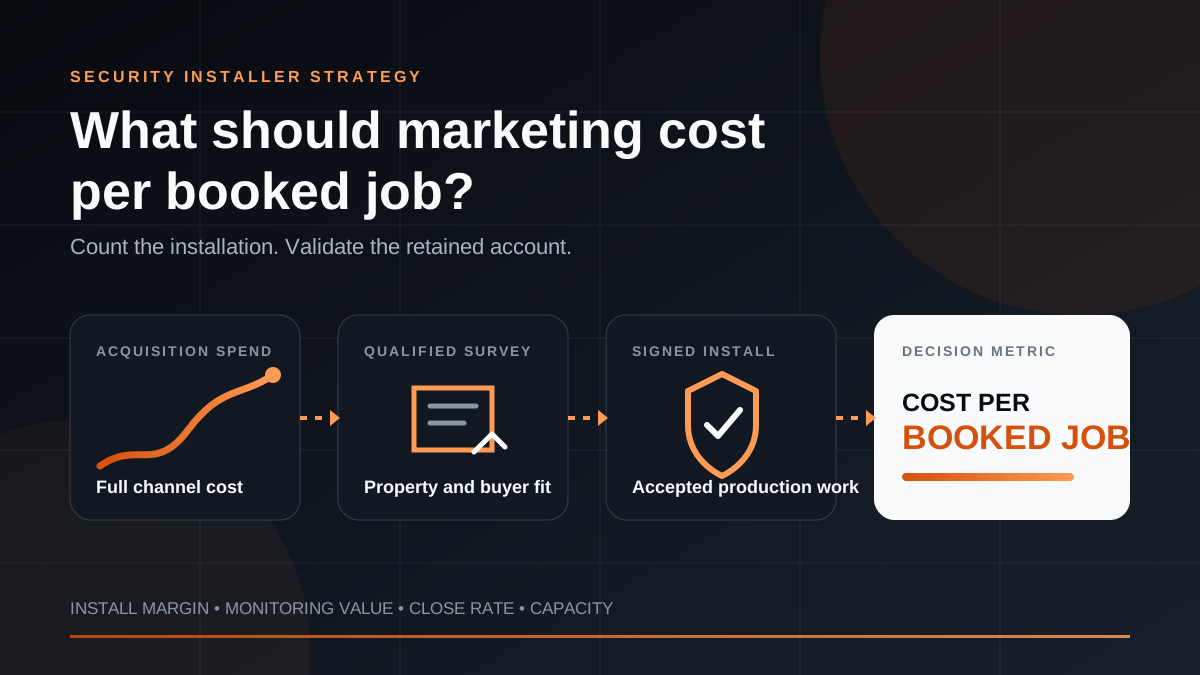
The right marketing cost for a security system installer is not a universal price per lead. It is the most the company can spend to win the right installation while protecting install margin, accounting for future monitoring value, and keeping sales and technician capacity under control. A cheap inquiry from a renter asking about one camera is not economically equal to a qualified homeowner planning a whole-property system or a commercial buyer requesting access control.
Set the target from your own job economics, not an agency benchmark. Start with the gross profit expected from the installation, add only the recurring value you can defend from retained customer records, reserve the contribution the business needs, and treat the remainder as the maximum acquisition allowance. Then work backward through your real close rate to find acceptable costs for site surveys, qualified opportunities, calls, and forms.
Why one lead benchmark fails security installers
Security demand covers several businesses hiding under one label. Residential alarm replacement, video surveillance, smart-home integration, commercial access control, intercoms, and multi-site systems have different contract values, sales effort, hardware requirements, and recurring revenue potential. Mixing them into one cost-per-lead report hides which work actually pays.
Lead quality also depends on facts that an ad platform cannot see by itself. Ownership status, property type, service area, requested equipment, monitoring expectations, decision authority, installation timeline, and compatibility with an existing system all affect whether a contact can become profitable work. A marketing report that counts every ring and form equally rewards volume before the company knows whether it can sell or deliver the job.
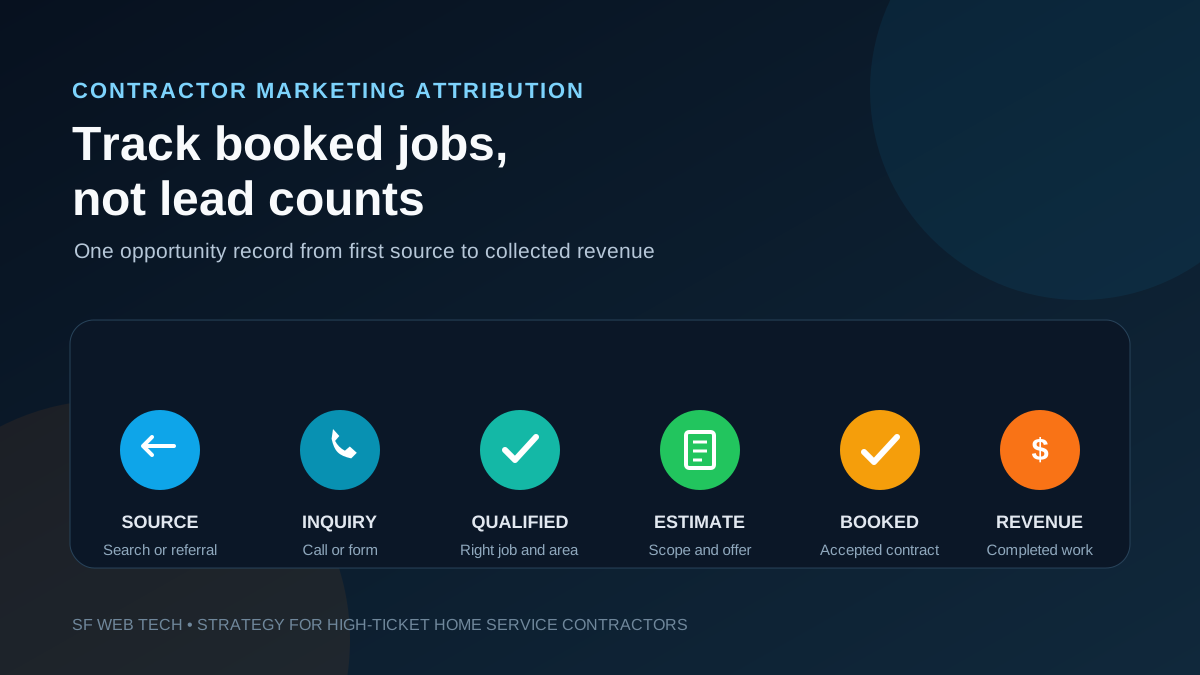
- Raw inquiry: a unique caller or form submitter, whether qualified or not
- Qualified opportunity: a prospect who fits geography, property, service, budget, authority, and timing requirements
- Site survey or sales appointment: a qualified prospect who completes the next meaningful sales step
- Booked installation: a signed job accepted into the production schedule
- Activated monitoring account: an installed customer whose recurring service has started
- Retained account: a monitoring customer still active at the review point your company uses
Connect search visibility, paid campaigns, landing pages, and attribution to signed installations.
See the contractor marketing systemBuild the ceiling from installation economics
Begin with the expected revenue for the specific installation being promoted. Subtract direct costs using the same accounting method the business applies elsewhere: equipment, technician labor, subcontractors, permits where applicable, commissions, payment processing, and other costs assigned directly to the job. The result is expected gross profit before marketing and overhead. Confirm classifications with the company accountant because treatment of vehicles, sales labor, warranty reserves, and software varies.
Next, reserve the contribution required for overhead, service obligations, warranty exposure, cash flow, and target profit. What remains can inform the acquisition allowance. A system sold near break-even because a monitoring agreement follows needs a different calculation from an install-only project. Do not let expected future revenue excuse a weak installation unless retained-account data supports the decision.
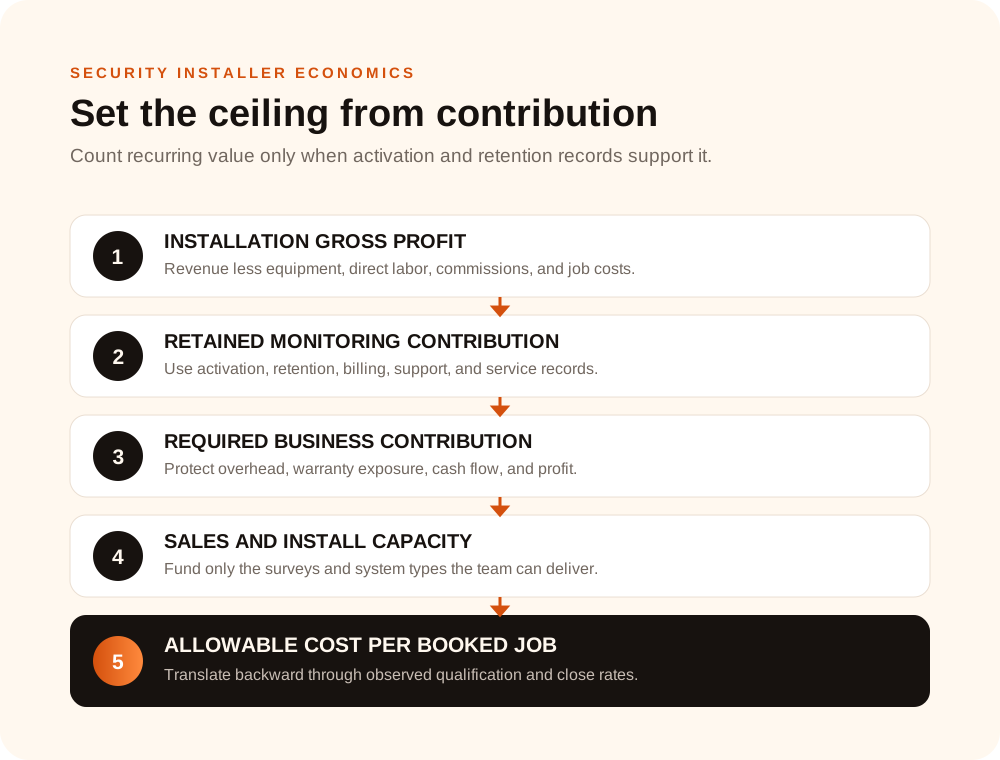
- Choose one job family, such as residential video, monitored alarm, or commercial access control
- Calculate expected installation revenue and direct job costs for that family
- Add only the recurring contribution supported by actual activation, retention, and service-cost records
- Reserve overhead, warranty, support, sales, and required profit
- Set the maximum acquisition allowance for an accepted signed installation
- Check whether sales and installation teams can absorb the volume the budget may create
Value recurring monitoring conservatively
Recurring monitoring can justify a higher acquisition cost, but only when activation and retention are measured. Pull cohorts by acquisition month and system type. Track how many sold accounts activate, how long they remain active, the recurring gross contribution they produce, and the service or support costs they create. If those records are incomplete, base the first decision on install economics and treat recurring contribution as upside until the data improves.
Keep residential and commercial cohorts separate. A homeowner installation and a multi-door access-control project do not share the same decision cycle, service load, expansion potential, or cancellation pattern. Also separate company-owned monitoring relationships from arrangements where another provider controls billing or retention. The acquisition model should reflect the value your company actually keeps.
- Counts the full contract value on day one
- Assumes every installation activates
- Uses promised term instead of observed retention
- Ignores service calls and support costs
- Combines residential and commercial accounts
- Separates install and recurring contribution
- Uses measured activation by job family
- Uses retained cohorts and realized billing
- Subtracts recurring delivery costs
- Reviews customer segments independently
Translate the booked-job ceiling into channel targets
Once the acquisition allowance is set, translate it backward with observed funnel rates. If the company needs several qualified site surveys to sign one installation, the allowable cost per completed survey is the booked-job allowance multiplied by the survey-to-sale rate. Repeat the process through qualification and initial inquiry. Use consistent stage definitions and enough history to reduce the effect of one unusually large commercial job.
Do not blend referrals into paid search performance. Referrals may close faster because trust already exists. Separate brand searches from non-brand searches, residential from commercial intent, and new installations from repair or support calls. Keep disqualified contacts visible with reason codes. That is how you learn whether a campaign is reaching the wrong geography, attracting do-it-yourself shoppers, or promising services the team does not sell.
Review fixed SF Web Tech pricing before setting the full acquisition budget.
Compare transparent monthly packagesCount the full acquisition cost
Media spend is only part of customer acquisition. Include management labor, landing pages, call tracking, CRM tools, creative, local SEO, listing management, sales commissions, site-survey time, and the reasonable portion of long-lived assets used to win the work. Use a consistent allocation method for assets such as a website so one month does not absorb their entire cost and later months do not pretend they were free.
Measure cost per booked job by job family and source. A channel can look profitable in aggregate while one campaign produces strong access-control opportunities and another produces low-fit support calls. The useful report shows total acquisition cost, unique leads, qualified opportunities, completed surveys, signed installations, activated monitoring accounts, and expected contribution by segment.
Track calls and send real outcomes back to Google Ads
Google Ads documentation says phone call conversion tracking can identify which keywords, ads, ad groups, and campaigns drive calls. For calls from ads and calls from a website, advertisers can set a minimum call length before a call is counted as a conversion. That filters some short calls, but duration still does not prove the prospect was qualified or that an installation was booked. Reconcile tracked calls with CRM and scheduling outcomes.
Google's official documentation on offline conversion imports explains how outcomes that occur later in the sales process can be connected to ad interactions. Its enhanced conversions for leads guidance describes using hashed, user-provided first-party data to improve that matching. For a security installer, useful downstream stages can include qualified opportunity, completed site survey, booked installation, system activation, and retained monitoring account. Follow consent, privacy, and platform requirements before uploading customer data.
- Capture original source, campaign, landing page, requested system, and territory
- Record calls and forms as unique prospects rather than duplicate conversions
- Use disqualification reasons such as renter, out of area, unsupported equipment, service-only request, or no decision authority
- Mark completed surveys, signed installations, activations, and cancellations as separate outcomes
- Reconcile booked work with scheduling or accounting records
- Review acquisition cost and retained value by channel and job family each month
Match spend to sales and installation capacity
A profitable acquisition target can still create an operational failure. Site surveys, system design, permitting, equipment procurement, installation, programming, training, and support all consume finite capacity. Before raising spend, define how many surveys the sales team can complete, how many installations each crew can absorb, and which system types deserve scarce calendar space.
Use paid search as a near-term demand control and SEO as a durable visibility asset. Paid campaigns can be narrowed by territory, schedule, and service line when the installation calendar changes. Search-focused service pages can build authority around the exact work the company wants, such as commercial access control or integrated residential surveillance. Marketing should create a controlled choice of profitable work, not a queue the team cannot serve.
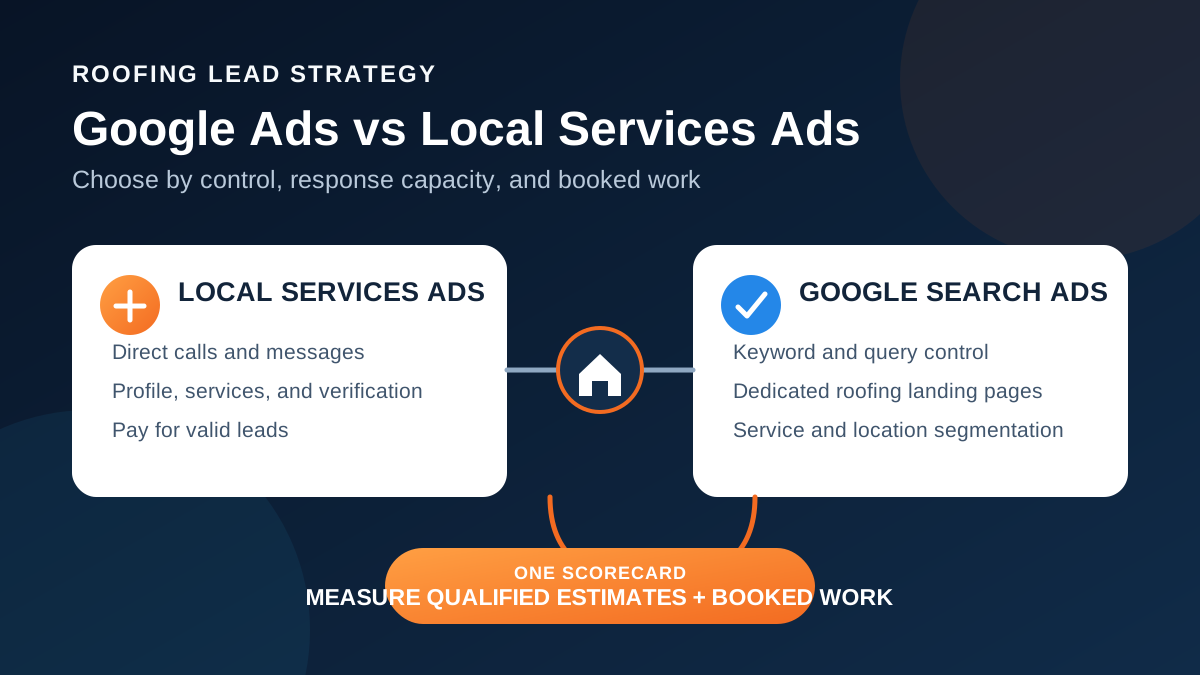
Use each channel for the job it does best, then measure both against signed work.
Compare SEO and Google AdsConnect media, landing pages, accepted leads, bookings, and paid outcomes.
Review Google Ads planning and measurementReview technical, content, internal-link, and market priorities alongside paid acquisition.
Build the owned-search foundationReview the target by cohort, not just by month
Monthly reports are useful for spend control, but recurring value needs cohort review. Keep each group of acquired customers open long enough to observe activation, early cancellation, service burden, and retained contribution. Revisit the acquisition ceiling when hardware costs, technician pay, commission plans, monitoring arrangements, close rates, churn, or production capacity changes.
- Total acquisition cost by source and job family
- Unique inquiries, qualified opportunities, and completed surveys
- Signed installations and expected installation contribution
- Activated monitoring accounts and activation rate
- Retained contribution by acquisition cohort
- Disqualification and cancellation reasons marketing can address
- Available survey, installation, and support capacity
The final rule is straightforward: marketing should win the right number of profitable installations at an acquisition cost the company chose deliberately. Cheap leads are irrelevant when they do not fit the property, system, territory, or buyer. A more expensive opportunity can be valuable when it becomes a sound installation and a healthy retained account. Set the ceiling from contribution, translate it through real funnel rates, track the signed and retained outcomes, and adjust spend to the work the team can deliver well.
Book a discovery call to connect installation economics, search strategy, and attribution.
Map your cost per booked jobSources and further reading
- Google Search: SEO Starter Guide
Crawlable links, descriptive page information and content organization. Practical trade examples are SF Web Tech recommendations.
Source checked .
- Google Ads: offline conversion imports
Connecting supported offline outcomes with advertising measurement. Lead qualification and contribution calculations are SF Web Tech operating guidance.
Source checked .
- Google Maps: prohibited and restricted content
Rules against fake engagement, incentives and selectively soliciting positive reviews.
Source checked .