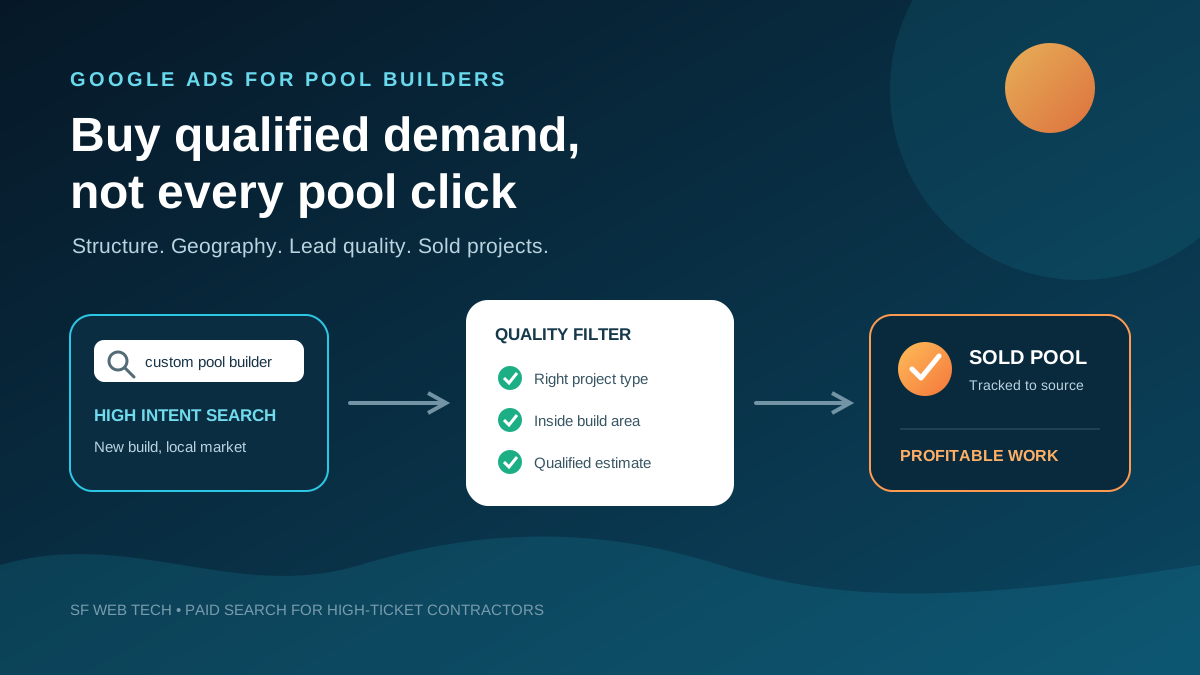
Google Ads can put a pool builder in front of a homeowner while that homeowner is actively comparing contractors. It can also spend a serious budget on pool cleaning, replacement filters, public swimming pools, jobs, and homeowners far outside the build area. The difference is not a clever bidding trick. It is whether the account is built around the work you actually want to sell.
A profitable pool campaign starts by separating new construction from remodeling, repair, and maintenance. It limits ads to a service area crews can cover, sends each search to a page that answers that project, and reports which leads become qualified estimates and sold pools. If the dashboard stops at clicks and form submissions, you cannot tell whether Google is finding future pool owners or just people with pool questions.
Why pool builder campaigns attract the wrong traffic
Pool is an unusually broad word. A search can come from a homeowner planning a custom gunite pool, an existing owner looking for weekly cleaning, a renter searching for a public pool, or a technician shopping for a pump. Those people can use overlapping phrases. An account that treats them as one audience forces high-value construction traffic and low-value service traffic to compete for the same daily budget.
Google's current keyword matching documentation says match types control how closely a keyword must relate to a search before an ad can enter the auction. Broader matching can reach additional related searches, while exact match narrows the relationship. That reach can help once conversion data is trustworthy, but it is dangerous when a new account has weak negatives and treats every lead as equal. Start with control, study actual search terms, and expand only when you know what produces qualified opportunities.
- custom pool builder
- inground pool contractor
- gunite pool installation
- backyard pool design and build
- pool builder in a genuine service city
- weekly pool cleaning
- pool supplies and replacement parts
- public pool hours and swimming lessons
- DIY pool kits and tutorials
- jobs, salaries, training, and certification
Campaign structure, landing pages, call tracking, and reporting built for high-ticket contractors.
See our Google Ads management approachStructure campaigns around the jobs you want
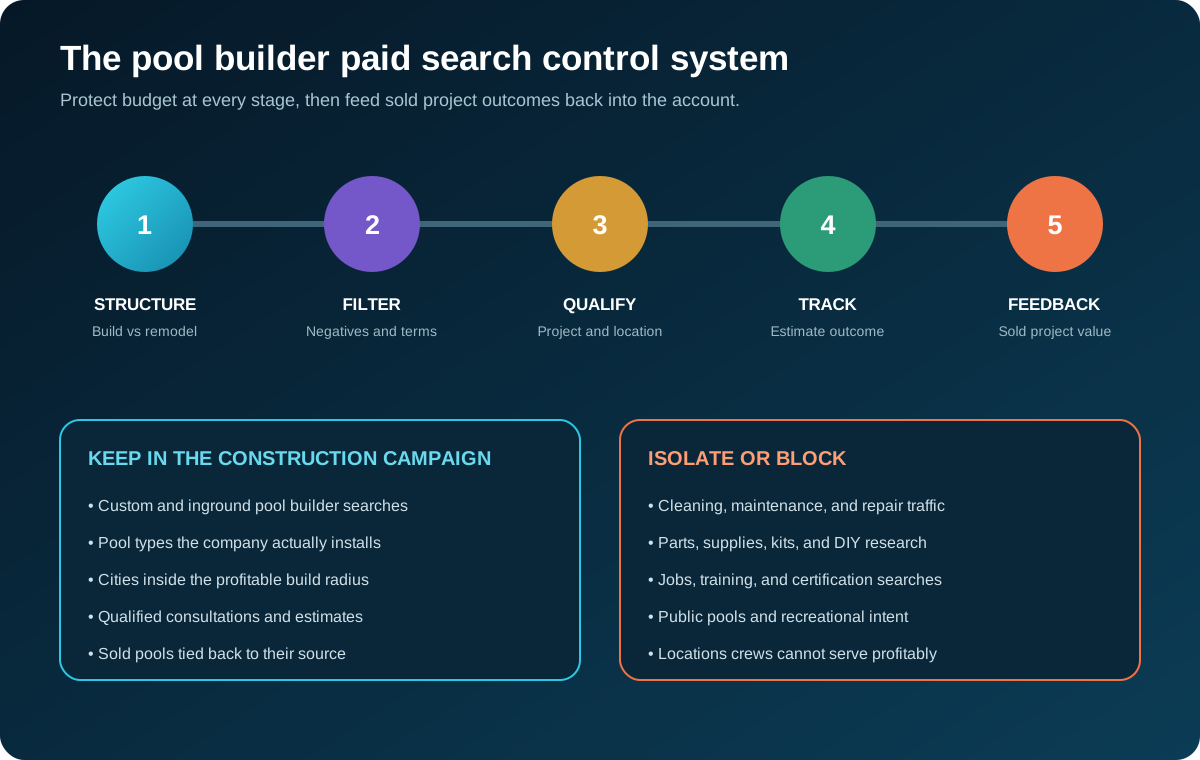
Do not put new pools, remodels, repairs, and maintenance in one campaign. They have different sales values, search language, qualification questions, landing pages, and follow-up processes. Separate campaigns give each line its own budget and make it possible to pause work you do not want without starving the construction campaign.
- Create a new pool construction campaign for the core build types you sell, such as gunite, fiberglass, or custom concrete pools. Split further only when the landing page and sales process are genuinely different.
- Create a separate remodeling campaign if renovations, resurfacing, decking, or equipment upgrades are a meaningful part of the business. Do not let renovation clicks consume the new-build budget.
- Keep repair and recurring service in their own campaigns, or exclude them entirely if they do not fit your model. A builder should not pay construction-level acquisition costs for work the company does not want.
- Use location-specific ad groups only for cities you truly serve and where the landing page carries local proof. Repeating a city name across thin pages does not create relevance or trust.
- Run branded search separately. Someone searching your company name is different from someone comparing every pool builder in the market, and the reporting should preserve that distinction.
Use negative keywords as budget protection
Negative keywords prevent ads from serving for searches that do not fit the offer. Google's current documentation also warns that negative match types behave differently from positive keywords. For example, advertisers may need to add synonyms and singular or plural versions they want excluded. That is why copying a short negative list once is not enough. The list needs to reflect the search language appearing in your own market.
- Service traffic you do not sell: cleaning, maintenance, opening, closing, chemicals, water testing, leak detection, and repair.
- Parts and products: pump, filter, heater part, liner for sale, cover, vacuum, robot, lights, and wholesale supplies.
- DIY research: kit, above ground, how to build, plans, tutorial, YouTube, and do it yourself.
- Employment intent: jobs, hiring, salary, technician, training, school, license class, and certification.
- Public and recreational intent: public pool, hotel pool, community center, swimming lessons, lap swim, and pool hours.
- Wrong geography: cities, counties, and states outside the area where you can profitably estimate and build.
Review the search terms report on a fixed schedule, especially after changing match types or budgets. Label each paid query by whether it reflects a potential build, a different service, research, employment, or an irrelevant location. The goal is not to block every unfamiliar phrase. The goal is to stop paying repeatedly for patterns that cannot become the work you want.
Tighten location targeting before raising the budget
A pool builder's true market is not every place a truck could technically reach. It is the area where the company can survey, design, permit, build, and support a project without travel eroding margin. Draw the advertising footprint from real operational history. Ask where sold projects cluster, where estimates tend to stall, which municipalities your team understands, and how far crews can travel while keeping the schedule healthy.
Google's advanced location options distinguish between a person's physical location and places they have shown interest in. Review the current presence and interest settings instead of accepting the default without thought. A homeowner researching a future move might still be valuable, but a person outside your build area can also consume spend without becoming a workable estimate. Use campaign data and your sales policy to choose the setting deliberately.
How project pages, local visibility, and real proof support qualified pool inquiries.
See the pool builder SEO case studySend each click to a project-specific landing page
The homepage is built to explain the whole company. A paid landing page should help one kind of prospect take one clear next step. A custom pool search should land on a custom pool page. A renovation search should land on a renovation page. Matching the promise reduces the amount of interpretation required from a homeowner who is comparing several builders at once.
- Lead with the pool type, genuine service area, and estimate action in the first screen.
- Show completed projects that match the search, with useful captions about scope, site constraints, materials, and design choices.
- Explain the path from consultation through design, approvals, construction, startup, and handoff without promising a timeline you cannot guarantee.
- Place licensing, insurance, warranties, reviews, and financing information near the point where a homeowner decides whether to inquire.
- Use a short form that captures contact details, location, project type, desired timing, and enough scope to route the lead. Save the full discovery process for the sales call.
- Make phone calls easy on mobile, but track them so the account does not treat every call, including vendors and existing customers, as a new sales opportunity.
Do not force every homeowner to name a precise budget before they understand the project, but do set expectations. Clear positioning, build types, service boundaries, and process can filter poor fits without making a serious buyer complete a long interrogation. The form should help your sales team start the conversation, not replace the conversation.
Measure qualified estimates and sold pools, not raw leads
Google Ads supports website conversion setup for actions that matter to the business. For a pool builder, the first tracked action might be a form submission or qualified phone call, but that is only the beginning. The useful reporting chain continues through contacted lead, qualified opportunity, site visit or design consultation, estimate issued, and sold project.
This matters because two campaigns can produce the same number of forms and completely different business results. One might generate service requests and price shoppers. The other might generate fewer inquiries but more viable backyards, realistic timelines, and homeowners ready for a design consultation. If both feed the bidding system as identical conversions, the account learns from the wrong signal.
Set the budget from capacity and sales economics
There is no universal pool builder ad budget that works in every market. Auction pressure, season length, pool type, geography, close rate, and build capacity all change the answer. Start with what the business can fulfill. If the design team can handle a limited number of serious consultations, buying a larger pile of unqualified leads will not create growth. It will create slower follow-up and a worse customer experience.
Work backward from contribution margin and actual close rates, then decide what a qualified opportunity can cost. Keep ad spend separate from management fees. Increase budget after search terms, destination performance, response coverage, qualified opportunities, sold outcomes, and capacity support a bounded change. Before increasing spend, use the pool-builder marketing readiness checklist to record the offer, project evidence, service area, sales capacity, and lead-quality baseline the campaign depends on.
- Confirm the pool types, remodel work, and service areas the company wants to sell this season.
- Build separate campaigns and landing pages for each distinct economic purpose.
- Launch with controlled matching and a substantial negative keyword foundation.
- Verify location options and exclude areas that cannot support profitable delivery.
- Track forms and calls, then qualify every lead in the sales system.
- Review search terms, lead quality, estimates, and sold projects together.
- Shift budget toward campaigns that create profitable work, not those that merely create activity.
Use paid search for immediate demand and SEO for compounding visibility, with clear roles for both.
Compare Google Ads with contractor SEOThe bottom line
Google Ads works for pool builders when the account behaves like the business. New construction gets protected from low-value traffic. Geography reflects real crew coverage. Landing pages match the project being sold. Sales outcomes return to the reporting. That system gives an owner something more useful than a lower cost per click: a defensible view of which advertising creates qualified estimates and profitable builds.
We will review your campaign structure, search traffic, landing pages, and lead-quality tracking before recommending a budget.
Book a discovery call with SF Web TechSources and further reading
- Google Search: SEO Starter Guide
Crawlable links, descriptive page information and content organization. Practical trade examples are SF Web Tech recommendations.
Source checked .
- Google Ads: keyword matching options
How keyword match types relate to search intent; account strategy and examples are editorial recommendations.
Source checked .
- Google Ads: negative keywords
Negative keyword behavior and exclusions. The suggested service exclusions require account-specific review.
Source checked .
- Google Ads: advanced location options
Presence and interest settings and the limits of geographic targeting accuracy.
Source checked .
- Google Ads: average daily budgets
Platform budget and spending mechanics, not a trade-specific CPC or lead-cost forecast.
Source checked .
- Google Maps: prohibited and restricted content
Rules against fake engagement, incentives and selectively soliciting positive reviews.
Source checked .