
A facility manager may search by building type, service requirement or location. Medical, gym, office and industrial cleaning can involve different access, documentation and operating needs. Build a separate page only when the company can describe a distinct scope and support its claims with current credentials and real work.
Commercial-cleaning pages often need different information from residential-cleaning pages. Review actual search queries, bid requests, facility types, service scope, compliance questions, contract economics, and proof before choosing which building-type pages to publish.
When a broad cleaning-services page is insufficient
Commercial cleaning buyers can include facility managers, portfolio operators, medical-office administrators, and warehouse supervisors, each with different scope and compliance questions. Use distinct content where those needs and the company’s evidence genuinely differ, then measure qualified opportunities rather than assuming a residential or commercial template fits every buyer.
Commercial pages should answer facility-management questions about actual scope, scheduling, insurance and documentation. Separate a building type only when the business serves it and has distinct information to provide. Do not claim certifications or compliance capabilities the operator cannot substantiate.
Commercial and residential contracts may have different frequency, staffing and economics. Use the company’s actual contribution and retention records when choosing priorities; a commercial inquiry is not automatically more profitable than a residential job.
Map facility needs and building-type language from evidence
Facility managers and other B2B buyers may use building-type, service, compliance, schedule, or location language. Use Search Console, keyword data, sales notes, and bid records to identify the terms and questions that matter in the actual market. Publish a distinct page only when the company can support its scope and claims.
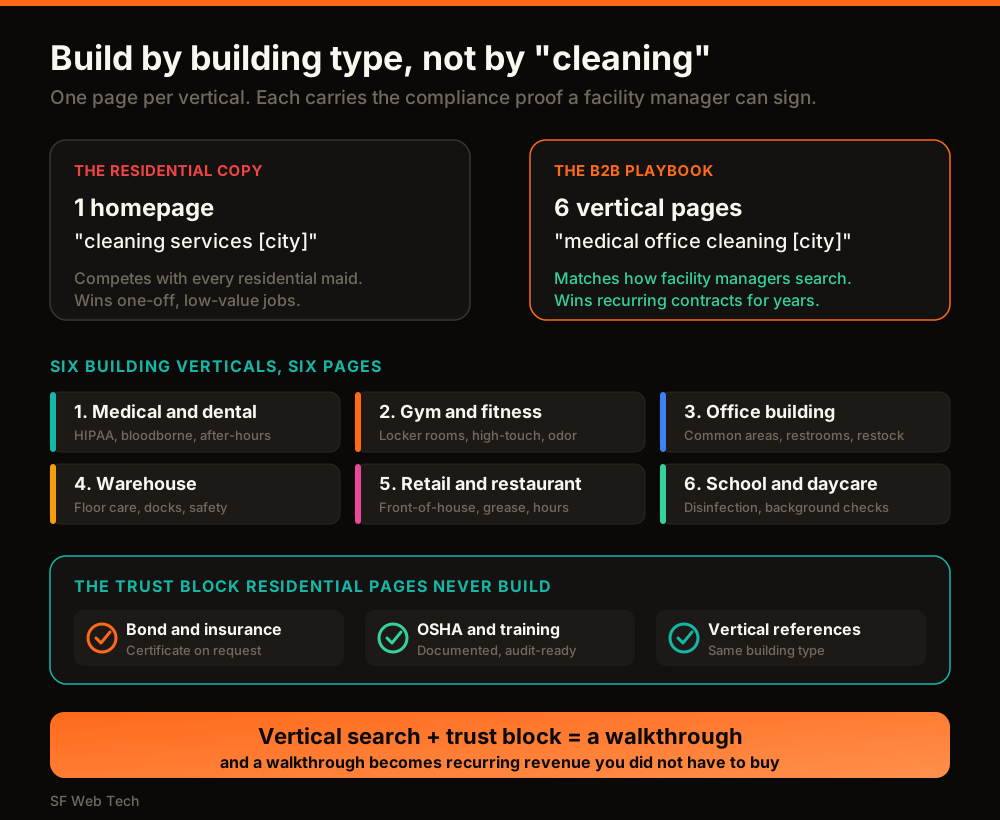
Map the building types the company genuinely serves and the questions each buyer asks. Create a separate indexed page when a vertical has distinct scope, compliance needs, proof, and search demand; consolidate building types that would repeat the same information.
Build a trust section for commercial buyers
Commercial buyers may need evidence about insurance, bonding, training, access, safety, quality control, and references. Publish the items the company can verify and that matter to the intended building type, then track whether suitable decision-makers request bids.
- General liability or janitorial bond information the company can verify, including certificate-of-insurance handling where offered
- Workers’ compensation information stated according to the company’s actual coverage and legal obligations
- Relevant safety practices and documented training held by assigned staff
- Screening, uniforms, badges, or access controls the company actually uses for the intended facility type
- Documented cleaning protocols, inspection steps, and client reporting that are part of the service
- Permissioned references or case evidence from comparable facilities when available
Useful service pages, accurate local information, internal links, and outcome measurement.
Review the Local SEO service scopeHow to build one page per vertical
Use a repeatable editorial checklist without turning vertical pages into copies. Publish a separate facility page only when it can accurately explain relevant scope, operating constraints, proof, qualification, and next steps. Measure qualified visibility and inquiries instead of assuming how a search system or facility manager will respond.
- An accurate title and H1 that describe the supported building type or service
- An opening that explains verified operating constraints, such as access, scheduling, documentation, or safety
- Scope that reflects the company’s actual work for that facility type
- Current insurance, bonding, training, or compliance information only where applicable and supportable
- Permissioned references, project context, or testimonials from comparable work when available
- A clear walkthrough, bid, or quote path that explains the real next step
“Facility-specific language, current insurance information, relevant documentation, and a clear walkthrough process can help a buyer evaluate fit. Confirm their effect through qualified bids and won contracts.”
Apply distinct scope, proof, qualification, internal links, and outcome measurement to commercial cleaning verticals.
Read an evidence-led service-page structureKeep the Google Business Profile accurate and measurable
The Business Profile may be one of several contact points a facility manager reviews. Keep categories, services, hours, coverage and contact details accurate. Measure profile interactions and qualified contract inquiries without assuming a particular map position receives a fixed share of calls.
A profile-maintenance checklist based on accurate information and documented work.
Optimize your Google Business Profile the right wayMeasure contract value, retention, and acquisition cost
Commercial cleaning can involve walkthroughs, written bids and several decision makers. Attribute each qualified opportunity to the best available source, then track proposal, won and paid outcomes separately. One contract may be valuable, but no page should be credited with recurring revenue until the sales and payment records support it.
A vertical page and an accurate profile can help a facility manager evaluate relevance before requesting a walkthrough. Compare organic discovery, qualified walkthroughs, proposals, won contracts and retained revenue by building type; do not assume a page or profile creates a contract on its own.
Your next 30 days
- List the building verticals you already service and can prove with references
- Prioritize verticals from actual service capability, contribution, references, demand, and capacity
- Write one full page per vertical, titled on the building-type query
- Add the compliance and trust block: bond, insurance, OSHA, and vertical-specific training
- Optimize your Google Business Profile categories, reviews, and real commercial photos
- Invite honest feedback from eligible B2B clients without prescribing wording or expected sentiment
Start with the services for which you have the clearest evidence and operating capacity. Expand when another substantial page answers a different customer question. Page count is not a ranking guarantee.
Use service mix, contract economics, proof and search evidence to prioritize the building types worth a useful page.
Book a call to map your vertical pagesSources and further reading
- Google Search: SEO Starter Guide
Crawlable links, descriptive page information and content organization. Practical trade examples are SF Web Tech recommendations.
Source checked .
- Google Business Profile: local ranking guidance
Google’s broad relevance, distance and prominence guidance. No exact ranking weights or guaranteed service-area coverage are stated.
Source checked .
- Google Maps: prohibited and restricted content
Rules against fake engagement, incentives and selectively soliciting positive reviews.
Source checked .