A homeowner considering a retaining wall or patio may compare masonry contractors on a phone before making contact. A useful portfolio can help that person assess project fit, materials, process, and craftsmanship; analytics and inquiry records can show how visitors actually use it.
Masonry craftsmanship can be difficult to judge through a screen. Use permissioned project photography, material details, process explanations, and project context to help buyers assess the work, then track whether suitable visitors request estimates.
Help buyers assess a long-lived project
Masonry projects are often expected to last for years, but durability depends on design, materials, installation, site conditions, and maintenance. Explain those factors accurately and show permissioned examples so buyers can evaluate the company’s approach.
Once you accept that the buyer is purchasing permanence, three design decisions follow, and the rest of this playbook is those three: a gallery built as proof, trust architecture for a high-ticket purchase, and a mobile experience that survives being used in an actual backyard.
The Project-Proof Gallery That Actually Converts
A gallery that converts is not a wall of pretty pictures. It is an argument. Each project should read like a tiny case study: what the space looked like before, what material you used, how long it took, and what it looks like now. When a buyer can see the whole story of one job, they stop wondering whether you can do theirs. Photos alone show that you own a camera. Photos plus context show that you own the outcome.
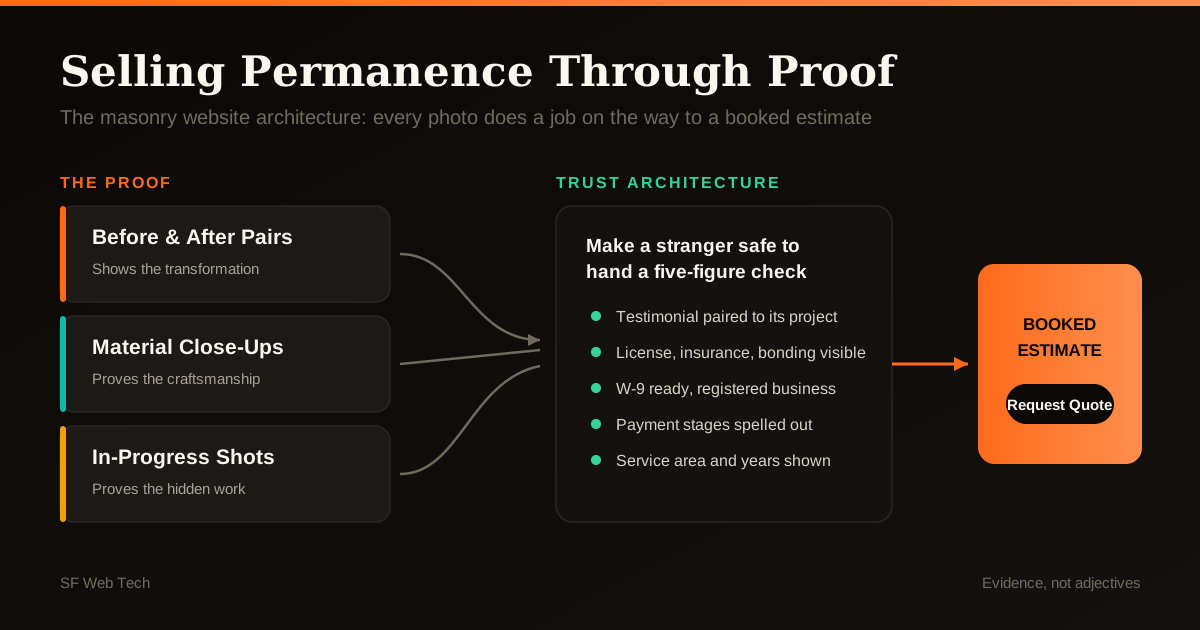
There are three kinds of shot a masonry buyer needs to see, and each one answers a different silent question in their head.
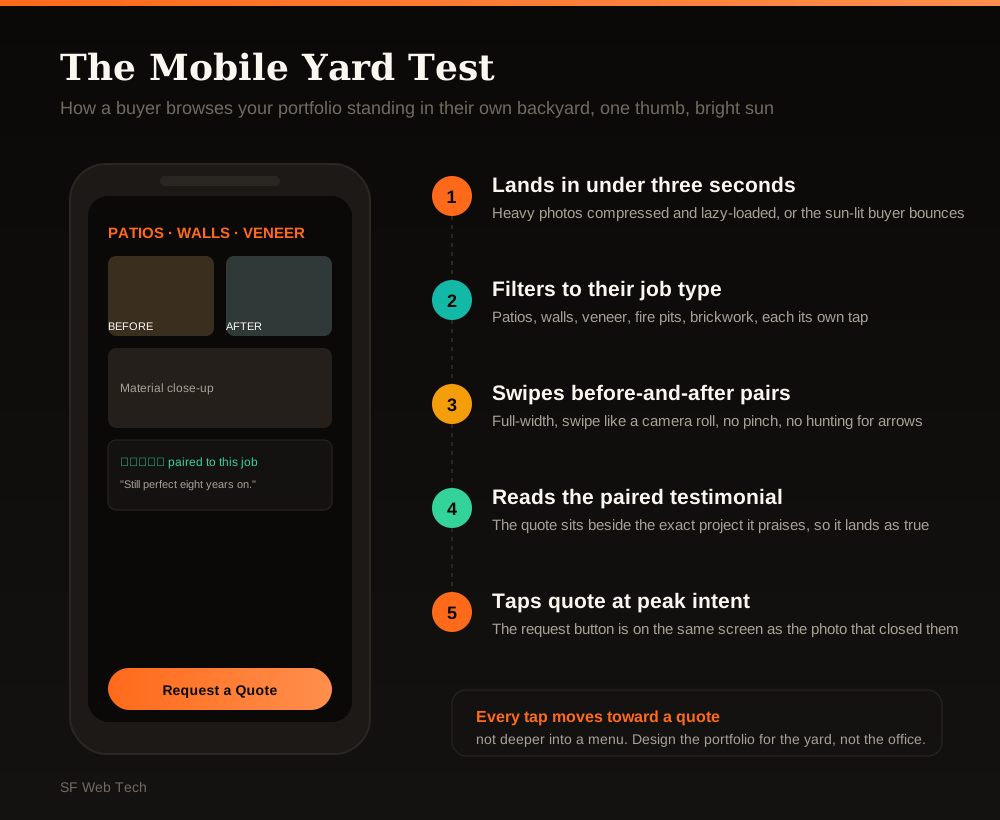
Organize the gallery by project type, not by date. A buyer who wants a patio does not care about your chimney work, and making them scroll past it is a good way to lose them. Give patios, retaining walls, stone veneer, fire pits, and brickwork their own filters. Let the buyer find the version of themselves in your portfolio fast.
- Projects grouped by type so buyers can find relevant work
- Before-and-after pairs when permission and conditions allow
- Material and detail close-ups that show craft
- In-progress photos that explain hidden work
- Concise project context covering scope, materials, and timing
- A small set of unrelated images on autoplay
- Controls that are difficult to use
- Little context about the project or result
- Different trades mixed without labels
- Relevant proof placed several interactions deep
Website design built around proof, not templates.
See how we build conversion-first contractor sitesTrust Architecture for a High-Ticket Purchase
Masonry project value and risk vary widely. Buyers may evaluate workmanship, process, insurance, scheduling, payment terms and whether the contractor fits the scope. Put current, verifiable trust information near the decisions it supports and test what prospects use rather than assuming a typical site or buyer response.
The strongest trust move is pairing every testimonial with the project it refers to. A five-star quote floating on its own is anonymous and easy to fake. The same quote sitting next to the before-and-after photos of that exact job is unforgettable, because now the buyer can see the work the words are describing.
- Pair each testimonial with the photos of the specific project it describes, not a generic wall of quotes.
- Put licensing, insurance, and bonding details where a buyer can see them, not hidden in the footer. At this price, they will look.
- Show that you are a registered business ready to provide a W-9 and proper documentation, which reassures both homeowners and any commercial buyer.
- Be explicit about how payment works: deposit, progress stages, and final. Clarity about money reads as honesty about money.
- Name your service area and years in business plainly. Longevity is itself a permanence signal.
Test whether visitors can view project detail, understand scope and make an inquiry on mobile. Place genuine customer feedback near the work it actually describes, with permission. A published design statistic does not predict the conversion rate of a particular masonry website.
“At a five-figure price, the buyer is not asking whether the wall will look good. They are asking whether you will still be standing behind it in ten years. Design the site to answer that question before they ask it.”
A close cousin trade with the same proof-and-trust problem.
Read the concrete contractor web playbookThe Mobile Yard Test
Some prospects browse project work on a phone while discussing an outdoor space; others research at a desk or arrive through a referral. Make the portfolio usable across screen sizes, lighting conditions, input methods, and connection speeds, then test the actual inquiry paths.
What a Brochure Site Quietly Costs You
A website can influence how a prospective masonry customer evaluates scope, fit, and credibility, but it does not reveal the full set of missed opportunities or determine who wins premium work. Use permissioned project evidence, current service information, accessible contact paths, and accurate credentials. Reconcile calls and forms with qualified opportunities, estimates, completed projects, and paid outcomes before assigning commercial value to a page change.
No mystery quotes. Know what a proof-first site costs.
See straightforward pricing for a contractor siteWhere to Start
Start with a small set of permissioned projects. For each, gather a before image, an after image, a material detail and an accurate customer comment where available. Add scope, location and constraints that help a prospect evaluate fit, then expand the library as new evidence is approved.
We will review the mobile page, inquiry path, and measurement gaps, then document changes worth testing.
Book a call about your masonry websiteSources and further reading
- Google Search: SEO Starter Guide
Crawlable links, descriptive page information and content organization. Practical trade examples are SF Web Tech recommendations.
Source checked .
- Google Search: creating helpful content
People-first writing, useful original information and the absence of a preferred word count. Does not substantiate a client result.
Source checked .