A prospective tile customer may study a portfolio on mobile before deciding whether to ask about scope, materials, timing, or price. Keep permissioned project images usable, place clear contact options near relevant content, and ask for information needed for the next step. Measure delivered inquiries, qualification, estimates, completed projects, and paid outcomes before claiming the page lost or won a ready buyer.
Review traffic quality and the contact path before diagnosing the problem. A strong portfolio may still need nearby scope, service-area, timing, cost-variable, and next-step information, but those gaps should be verified from actual behavior and qualified inquiries.
Measure the current share of relevant visits that produces qualified inquiries, using consistent definitions. A new layout or form should be judged against that baseline; there is no universal contractor conversion rate or guaranteed multiplier from custom design.
Directional benchmarks do not establish why one portfolio produces more inquiries than another. Compare the actual traffic source, device mix, page experience, project evidence, offer, contact path, delivery, qualification, estimates, completed projects, and paid outcomes.
Test whether the portfolio supports the next step
Walk the portfolio journey on representative devices. Check whether each project provides accurate material, scope and location context, and whether an interested visitor can reach the right inquiry path. Use interaction and qualified-request data to identify friction rather than assuming a typical gallery behavior.
This is why traffic reports lie to you. You see sessions climbing and time-on-page looking healthy and you assume the site is working. It is not. Long time-on-page in a portfolio with no CTA is not engagement, it is a buyer looking for the exit and not finding a door.
Tile is a visual-trust purchase
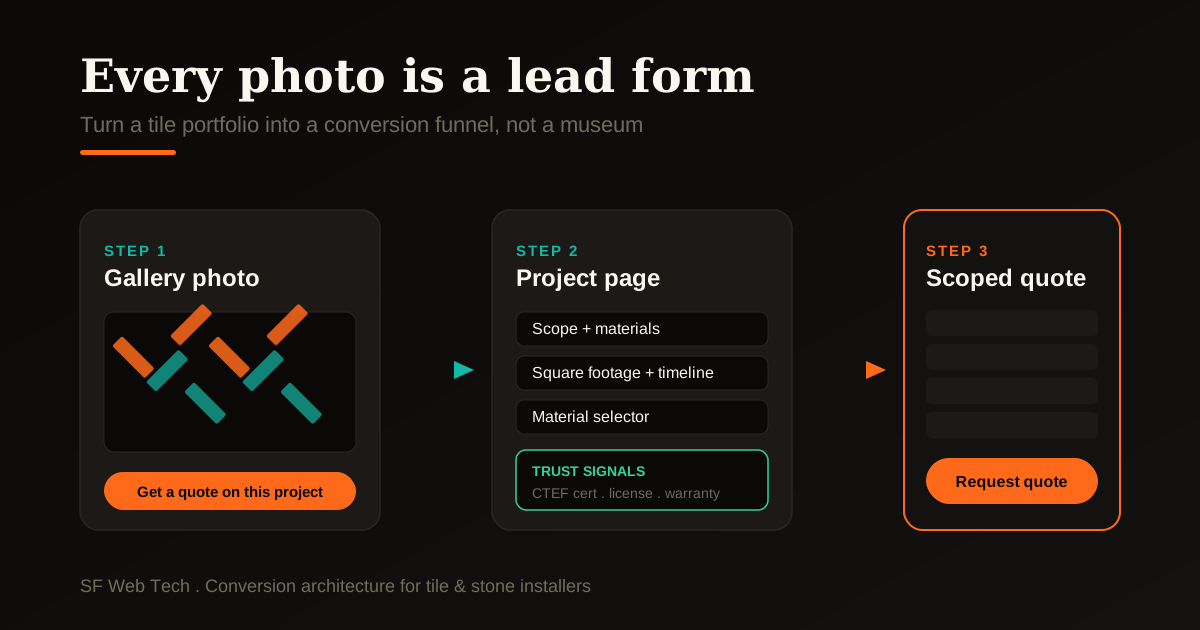
A tile portfolio helps homeowners judge style, detail, and fit for their project. Pair relevant project photos with accurate scope notes and a clear next step so visitors can move from evaluating the work to requesting an estimate without assuming that imagery alone caused the inquiry.
The fix is not more photos. It is a conversion path attached to the photos you already have. Here is what that path looks like when it is built right.
Link genuine project examples to an inquiry form that preserves the chosen project type. Ask only for information useful to the next step. Show certifications, insurance and warranties only when current and applicable to that installer; a project page does not automatically earn a search position.
Two buyers, two funnels
Here is the mistake that quietly caps most tile installer sites: they build one page and one form for two completely different buyers. The homeowner doing a single feature and the general contractor or interior designer specifying materials for a whole project are not shopping for the same thing, and they will not convert on the same page.
- Wants a backsplash, shower, or floor done well
- Buys on inspiration and trust in your craftsmanship
- Needs before-and-after proof and clear pricing signals
- Converts on a scoped, low-friction quote form
- Ready now, one decision maker
- Specs materials across multiple rooms or units
- Buys on reliability, timeline, and spec-matching
- Needs a trade or partner page, not a homeowner pitch
- Converts on a project intake or account form
- Repeat volume, longer relationship
Give each buyer their own landing page and their own form. The homeowner page leans on the portfolio and social proof. The trade page leans on capacity, licensing, insurance, and a fast intake for bulk or repeat work. One site, two front doors. Every ad and every referral link should point to the door that matches the buyer, not to a homepage that tries to serve both and convinces neither.
Website design built around your portfolio, not around a template.
See how we build conversion into contractor sites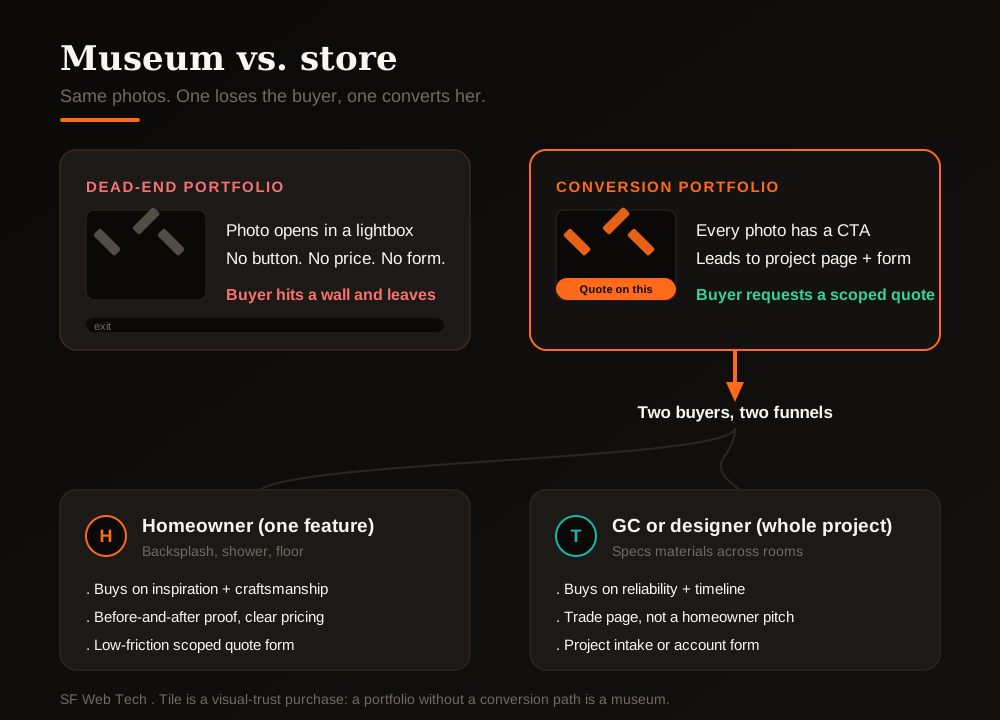
The five fixes that move the number
You do not need a rebuild to start converting the traffic you already have. Work down this list in order. The first three are free wins you can ship this week.
- Add a project-related quote path where the selected project type can be passed accurately and with consent.
- Make the current phone route easy to use on mobile when the business can staff it.
- Match form fields to real intake and qualification needs, such as room type, approximate area, material and timing.
- Show current, supported credentials, warranty terms and permissioned reviews near the evidence they help explain.
- Separate homeowner and trade journeys when their services, questions and intake processes materially differ.
These changes leave the project evidence intact while clarifying the supported next step. Measure form delivery, qualified inquiries, estimates, and sold work before attributing an outcome.
“A portfolio is easier to act on when each project explains the scope and offers a relevant next step. Measure which examples assist qualified inquiries instead of treating every gallery view as buying intent.”
Fix the contact page while you're at it
The generic contact page is where tile leads go to die. Name, email, blank message. It asks the buyer to do the work of describing a job she can barely name, and it signals nothing about you at the moment she is deciding whether to trust you. A tile installer contact page should feel like the start of a quote, not the start of a support ticket.
We will walk your portfolio the way a buyer does and show you the leaks.
Get a conversion audit of your current siteCalculators and pre-qualifiers do the quoting you hate
A square-footage and material calculator can collect room type, rough size, and material preference before an inquiry. If its assumptions and limitations are explained, it may reduce some initial back-and-forth. Treat the result as planning context, then verify scope, site conditions, and lead quality through the normal estimate process.
- A backsplash or shower calculator that turns square footage plus material tier into an estimate range sets expectations and filters out mismatched budgets.
- A material selector on project pages lets designers and GCs pre-spec, which is exactly the intake a trade buyer wants.
- An instant range, even a rough one, beats a form that promises someone will call you back eventually, because it rewards the buyer's action immediately.
Pre-qualification is not about turning people away. It is about making sure the people who reach your phone are the ones you actually want to quote, so you spend your time closing instead of filtering.
The same portfolio-to-quote playbook, applied to countertops.
Read: countertop installer website conversionIf the traffic is not there yet, start here first.
Read: why your contractor website isn't rankingYour photos already did the hard part
A visitor who explores a project image may still need material, scope, budget, scheduling and trust information. Add a relevant next step, keep the form proportional, and connect evidence with the correct service path. Judge the change through delivered inquiries, accepted opportunities and paid work rather than assuming traffic converts automatically.
We build evidence-led tile and stone sites that connect documented project work to a clear estimate path.
Book a call with SF Web TechClear packages for home-service sites that convert.
See pricingSources and further reading
- Google Search: SEO Starter Guide
Crawlable links, descriptive page information and content organization. Practical trade examples are SF Web Tech recommendations.
Source checked .
- Google Search: creating helpful content
People-first writing, useful original information and the absence of a preferred word count. Does not substantiate a client result.
Source checked .
- Google Maps: prohibited and restricted content
Rules against fake engagement, incentives and selectively soliciting positive reviews.
Source checked .